
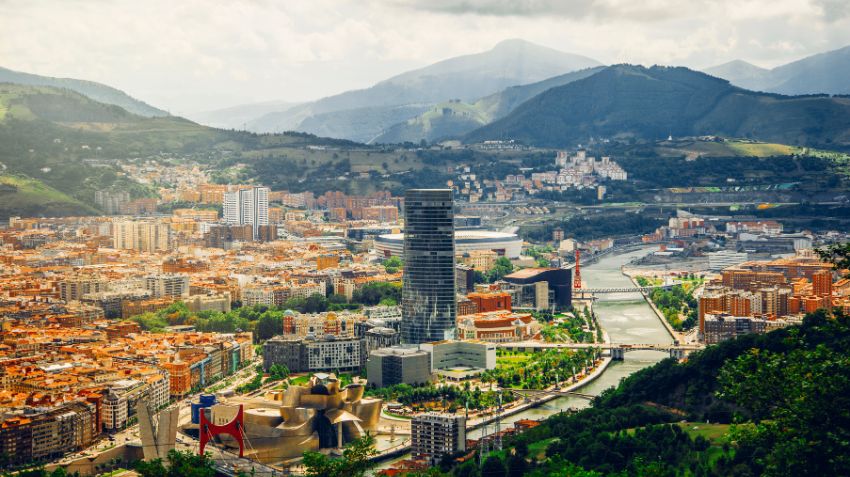
The Basque Country sits in a small stretch of northern Spain where the Atlantic light is different from the south and the food culture runs deeper than almost anywhere on the peninsula. San Sebastián or Bilbao: which Basque city fits your trip is a question most travelers end up asking within minutes of planning, and the answer is less about quality and more about what kind of trip you’re actually building.
These are two cities with distinct rhythms and different emotional registers. San Sebastián is compact and quietly beautiful, oriented around the beach, the Parte Vieja and a concentrated intensity that is hard to match anywhere in Europe. Bilbao is larger, more layered, and carries an urban energy shaped by genuine reinvention. The pintxos culture connects them. Almost everything else sets them apart.
What San Sebastián and Bilbao actually feel like as cities
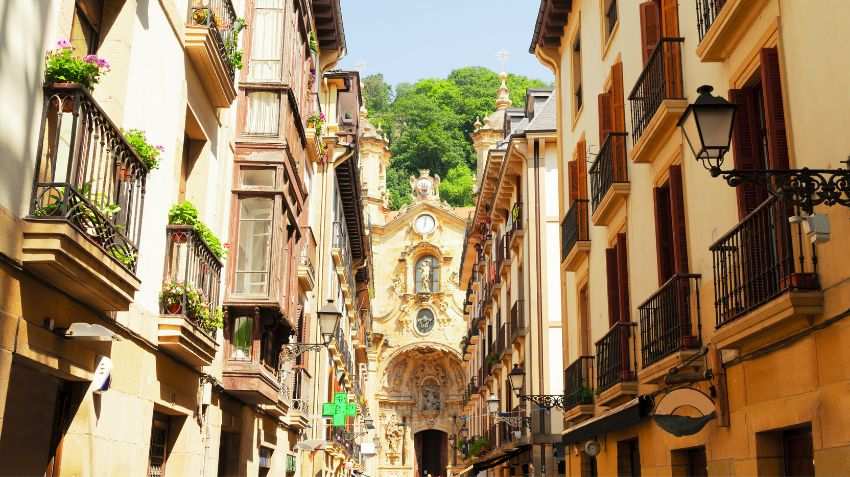
San Sebastián is built around La Concha bay, and the geography gives it a natural frame that few European cities can match. The Parte Vieja sits at the eastern end of the bay, narrow streets pressed against each other, bar after bar with pintxos lined along the counter under the glass. The old town is small enough to walk end to end in fifteen minutes, dense enough to spend an evening losing track of time inside it.
The city has a measured, almost self-contained quality. Most of the action concentrates in a walkable core. The beach and the promenade on the Concha side are a two-minute walk from the old town. Monte Urgull rises behind, Monte Igueldo to the west, and the whole thing sits within a geography that feels almost stage-designed. The light on the bay around 20:00 in late July is one of the cleaner reasons people keep returning.
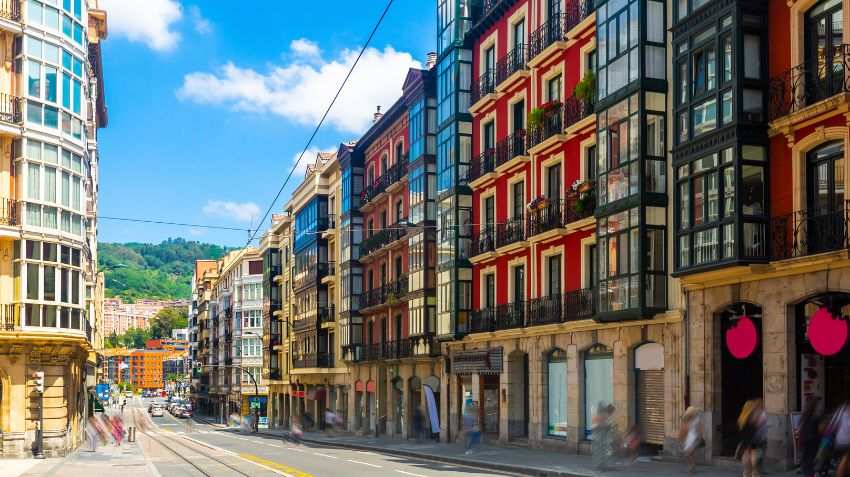
Bilbao feels different from the first morning. It is a larger, more complex city, and it does not reveal itself immediately. The Casco Viejo is the comparable historic core, also walkable and also pintxos-dense, but the city spreads beyond it into the Ensanche, Bilbao La Vieja, Abandoibarra along the river.
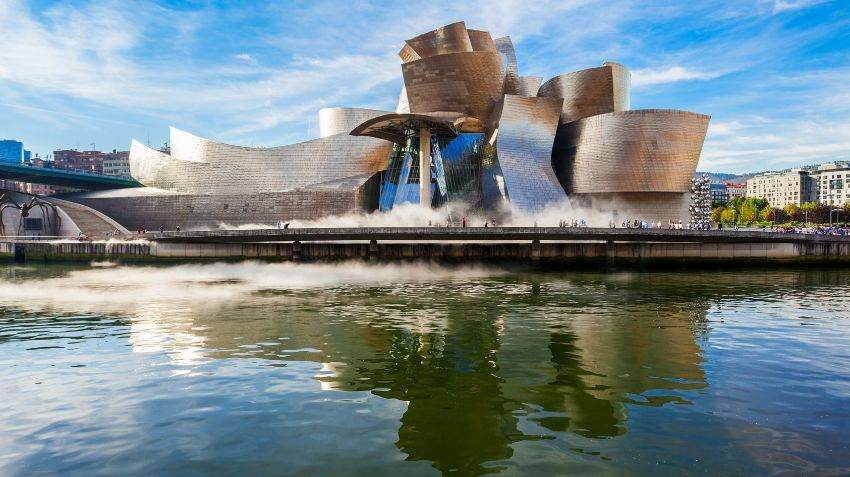
The Guggenheim Museum sits on the riverbank and functions as an anchor for the whole left bank, not just an attraction but an architectural reference point that reorganizes the way you move through the city. The river walk from the old town to the Guggenheim takes around twenty minutes on foot and works as a daily orientation rhythm.
Bilbao and San Sebastian in photos
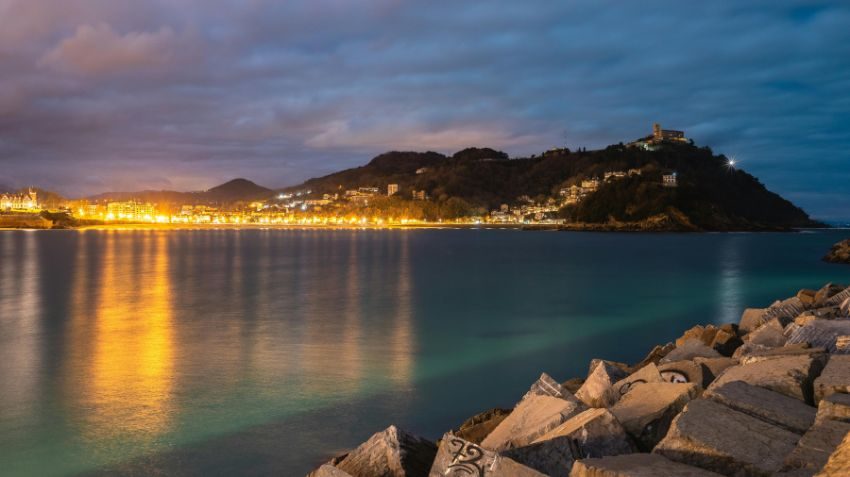
San Sebastián or Bilbao: which city suits your travel style?
San Sebastián works best for travelers who want a high-quality, compact base with a clear emotional identity. If you want to eat extraordinarily well, walk between places without transit, swim in the mornings and settle into a bar routine by early evening, the city is nearly perfect for that shape of trip. It suits couples, solo travelers who like a clear physical framework, and anyone who values atmosphere over variety.
It tends to suit slower-paced travelers more than city explorers. There is not a huge amount to discover beyond the Parte Vieja, Gros across the river, and the beach neighborhoods. The beauty is concentrated. Two or three days here feel full without being rushed; much beyond that and some travelers start to feel the edges of the city.
Bilbao suits a different energy. It rewards curiosity and a willingness to move between distinct neighborhoods, each with its own character and its own time of day. Travelers interested in contemporary design, urban texture and a city still actively rewriting its own identity will find more to engage with here. Remote workers who want a functional base with a genuine city feel and enough variety to sustain a week often find Bilbao easier to inhabit than San Sebastián.
If Bilbao already feels like the stronger match, the Bilbao travel guide explains how to structure a first visit beyond this comparison. For travelers weighing a similar question elsewhere in Spain, the Madrid or Málaga comparison covers a related north-south register shift, where the choice between urban depth and coastal rhythm plays out at a different scale.
How the pintxos culture actually differs between the two cities
This is the part of the comparison that trips people up, because both cities are genuinely exceptional and both will argue they are better. In San Sebastián, the Parte Vieja bars tend toward a refined, almost competitive presentation.
The pintxos on the counter are carefully constructed, the selection changes by the hour, and there is a concentrated ritual to moving between three or four bars across the evening. The Gros neighborhood, across the river, carries a slightly younger crowd and a less tourist-facing rhythm.
Bilbao’s Casco Viejo bars are a little more varied and less polished. The evenings there feel slightly less choreographed, more lived-in. Both experiences are worth having, and the gap between them is smaller than the city rivalry suggests. The real difference is in the setting, not the food.
Both cities follow the same pintxos clock: the bars start filling around 19:00, the counters are freshest between 19:30 and 21:00, and the rhythm holds well past 22:30. Arriving earlier than you think you need to is the one consistent piece of advice that holds in both places.
Travelers deciding where to stay before booking accommodation can also explore the Bilbao neighborhood guide to compare the city’s main districts.
How to move between San Sebastián and Bilbao and pace a Basque trip
The two cities are connected by a direct train that runs in roughly 70 minutes. The route through the Basque landscape, green hills and coastal glimpses, makes the journey its own experience rather than dead time. Trains run regularly enough that a split itinerary does not require much planning.
The most common pattern is two nights in one city, two in the other, with the train connection mid-trip. Which order you choose affects the emotional arc. Starting in Bilbao tends to work well because the city takes slightly longer to settle into; San Sebastián then becomes the quieter, more concentrated ending. Starting in San Sebastián works for travelers arriving by air through its small local airport or through the French border, wanting to ease into the region before the larger city.
If you’re extending beyond the Basque Country, the Spain itinerary guide shows how northern Spain connects naturally with the country’s classic city route.
Neither city has strong day-trip logic in the conventional sense. The region around both is worth exploring, Getaria along the coast from San Sebastián, the Basque wine country toward Laguardia from Bilbao, but both cities are dense enough that most travelers find enough within the urban core without needing to move beyond it daily.
Travelers who decide San Sebastián works as their primary base often find they want to understand the neighborhood structure more precisely before booking. The Bilbao areas guide covers the equivalent question for the other city, useful for anyone planning to anchor two or three nights there on the same trip.
Summer rhythm across both cities and when the fit shifts
July and August bring the highest visitor activity to both cities. San Sebastián feels this more acutely, partly because it is smaller and partly because it draws significant domestic Spanish tourism alongside international visitors. The Parte Vieja bars fill quickly from early evening; the Concha beach reaches peak activity by midday and the promenade stays busy until late.
The city handles this well, and the atmosphere does not collapse under the activity, but it is worth knowing that peak summer in San Sebastián is genuinely full.
Bilbao in summer is busy without reaching the same saturation. The river walk and the Ensanche absorb the activity across a larger footprint, and there are quieter pockets even in July, Bilbao La Vieja on the left bank, the market area around the Ribera, that feel more locally-paced even at peak season.
Travelers comparing northern Spain with another major Spanish city break may also find the Madrid or Barcelona comparison useful before finalizing their trip.
Shoulder months, September and October, are widely considered the best window for both cities. The Basque Country’s green landscape is at its best in autumn, the summer visitor activity drops noticeably, and the food culture is unchanged. The coast cools, but the evening terrace rhythm continues well into October.
Travelers who are flexible on timing and comparing the Basque Country against other Spanish autumn options sometimes follow this against a broader Spain scan, and the Barcelona and Málaga comparison is useful context for understanding how different the coastal registers feel across the country at the same time of year.
Is a San Sebastián and Bilbao trip worth combining?
For most travelers arriving in the Basque Country with four or five days, combining both cities makes more sense than choosing between them. The train connection is easy, the two cities offer genuinely different registers, and the contrast between them makes each one clearer. San Sebastián without Bilbao can feel slightly complete in the wrong direction, like the trip ended before it expanded. Bilbao without San Sebastián leaves a gap in the sensory picture of the region.
The choice becomes real when the trip is short, two or three days total, or when one city clearly fits your rhythm better than the other. Travelers who prioritize beach access, a tight walkable core and an emotionally immediate atmosphere tend toward San Sebastián. Travelers who want urban depth, architectural interest and a city that rewards longer and more exploratory stays tend toward Bilbao. Both answers are correct; they are just describing different trips.
The Basque Country is a small enough region that San Sebastián or Bilbao is rarely a permanent choice. Most travelers who spend time in one city find themselves planning a return to see the other.
San Sebastián vs Bilbao FAQ: first visit, travel time, food, summer crowds and weekend trips
1. Is San Sebastián or Bilbao better for a first visit to the Basque Country?
San Sebastián tends to suit travelers who want a compact, beautiful base with beach access and an easy, atmospheric rhythm. Bilbao works better for those drawn to urban energy, contemporary culture and a more varied city to explore across several days. First-timers who want both often spend two nights in Bilbao and two in San Sebastián, connected by a 70-minute train.
2. How far apart are San Sebastián and Bilbao?
The two cities are roughly 100 kilometres apart along the Basque coast. Direct trains run the journey in around 70 minutes, making a two-base itinerary straightforward without long travel days.
3. Which city is better for food?
Both cities have exceptional pintxos cultures, and the rivalry between them is genuinely close. San Sebastián’s Parte Vieja bars carry a slightly more refined, concentrated intensity; Bilbao’s Casco Viejo is a little more varied and less polished, which some travelers find more comfortable. The Basque Country as a whole has more Michelin-starred restaurants per capita than almost anywhere in Europe.
4. Is San Sebastián very crowded in summer?
July and August bring peak visitor and domestic tourist activity to San Sebastián, and the Parte Vieja bars fill early in the evening. The beach itself is popular but generously sized. The city keeps its atmosphere under pressure well; arriving at the pintxos hour closer to 19:00 rather than 21:00 gives you the food without the fullest crowd.
5. Which city suits a short weekend trip better?
San Sebastián compresses beautifully into two days; the old town, the beach and the Concha promenade form a natural loop. Bilbao rewards a slightly longer stay: the Guggenheim, the Casco Viejo, Bilbao La Vieja and the surrounding neighborhoods each have their own character and the city takes time to settle into properly.