
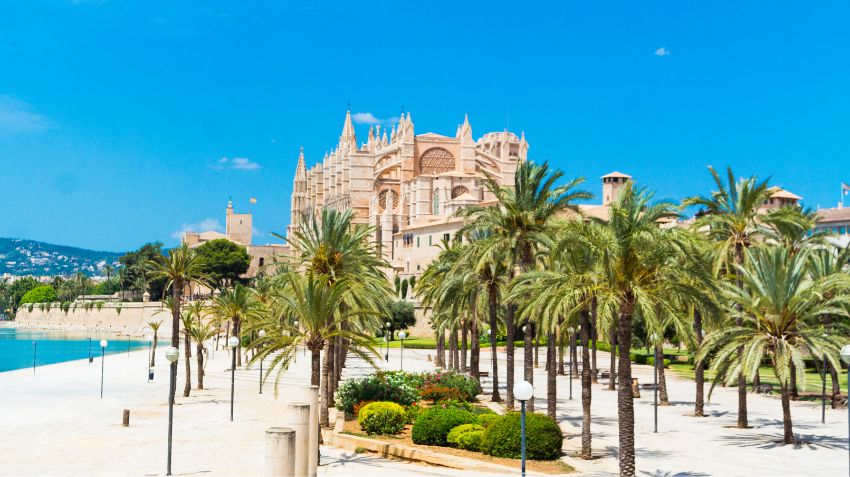
Palma de Mallorca in August has a particular quality in the early morning: stone pavements still cool underfoot, the cathedral catching the first flat light off the water, the smell of espresso arriving from somewhere down the alley before you can identify where. By ten o’clock the city shifts register completely.
Understanding that shift is most of what choosing where to stay in Palma actually means. The best areas to stay in Palma de Mallorca are not simply a matter of proximity to the cathedral – they are about which version of the city you want to wake up inside.
Palma is compact enough that no central neighbourhood is truly inconvenient, but the atmospheres are distinct enough to matter. The old town runs on a tight, layered rhythm: narrow lanes, sudden squares, the seafront a few minutes south.
Santa Catalina has a market, a lower tempo at breakfast, and an evening restaurant scene that draws locals as much as visitors. El Terreno sits slightly further west, quieter at night, with a residential character that makes longer stays feel more sustainable. And the Paseo Marítimo strip offers something else again – wide, open, hotel-dense, with the water always visible but the city’s interior a short distance away.
Best areas to stay in Palma de Mallorca: neighborhood comparison
The old town (Casc Antic) is the most immediate version of Palma. You are never far from the cathedral end, from the Plaça Major, from the tangle of streets that makes the city recognisable in photographs. In summer the lanes between the main squares fill steadily from mid-morning, but the density is rarely as extreme as comparable old towns in Barcelona or Seville – partly because Palma’s streets are wider in places, partly because the geography keeps spreading visitors toward the waterfront. Two streets back from the main axes, it quietens noticeably.
Santa Catalina sits just west of the old town, roughly a ten-minute walk from the cathedral along the seafront or through the Plaça de la Drassana. The neighbourhood has a market at its centre that works genuinely well in the morning – not a tourist market, but an actual food market with the rhythm of one. The streets around it are lower-rise and more residential than the old town proper, and the restaurant concentration on Carrer de Sant Magi runs late into the evening with a relaxed energy that feels less performance-oriented than the old town’s main terraces.
El Terreno is the neighbourhood that has been quietly repositioning itself for several years. Historically the city’s international quarter from the mid-twentieth century, it now reads as low-key and genuinely residential, with a scattering of bars and small restaurants that operate without the visibility of Santa Catalina’s scene. For travelers staying a week or more, the quieter nights and the easy bus or taxi access to the centre make it a reasonable base. It is a fifteen-minute walk to the old town or a very short ride.
The Paseo Marítimo is Palma’s seafront boulevard – wide, hotel-lined, with the marina running alongside. It is not a neighbourhood in the social sense, more a corridor between the old town and the western residential areas. Staying here puts you on a beautiful stretch of water with the city’s skyline visible across the harbour, but the scale works differently from the lanes inside: it is open and breezy rather than intimate, and the ground-floor life is mostly hotel lobbies and car traffic. Some travelers find that registration easier for a first night before moving further in.
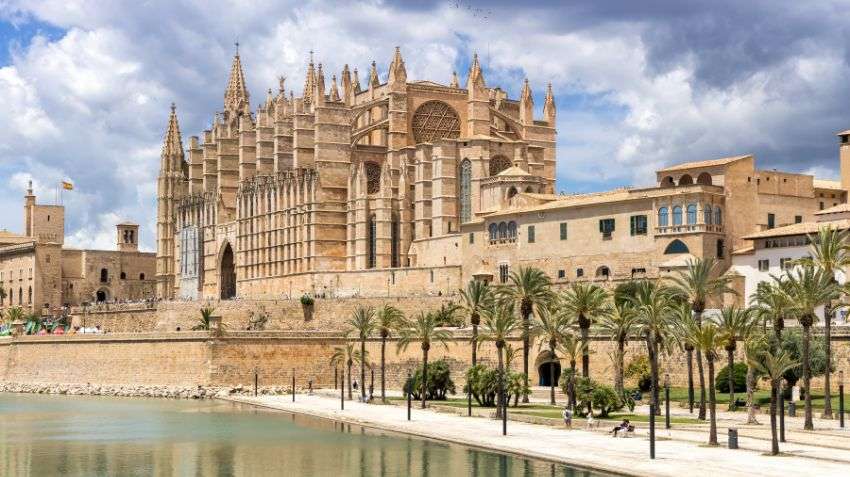
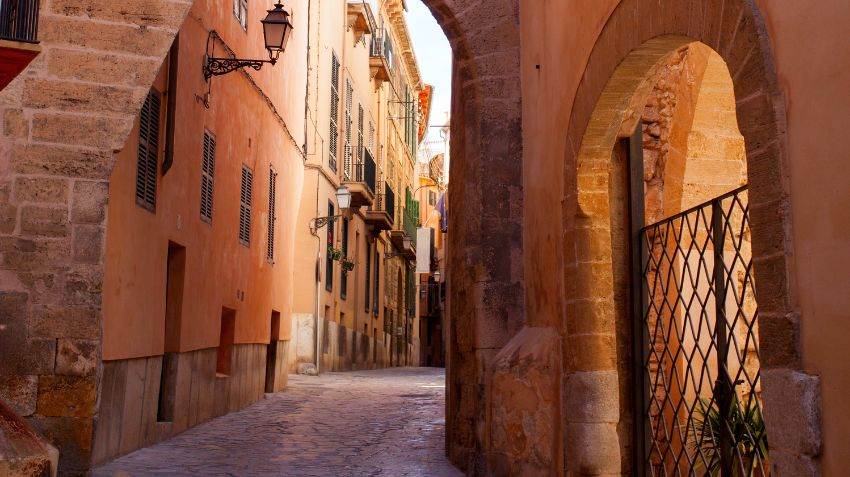
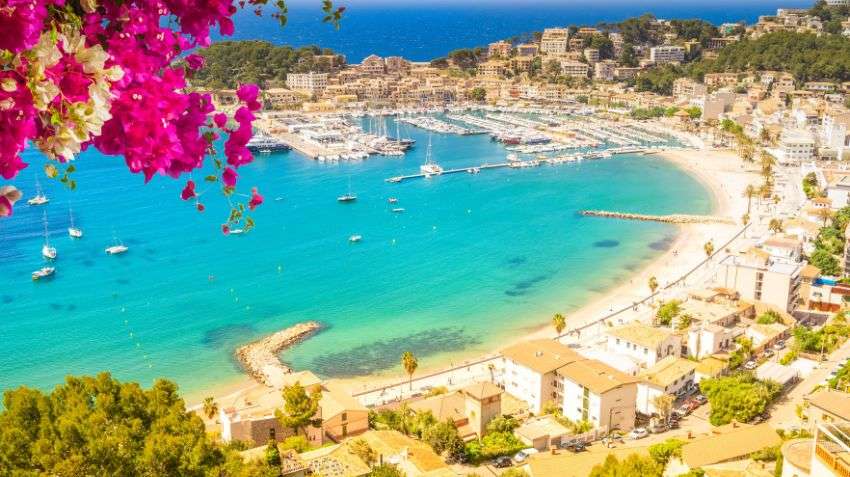
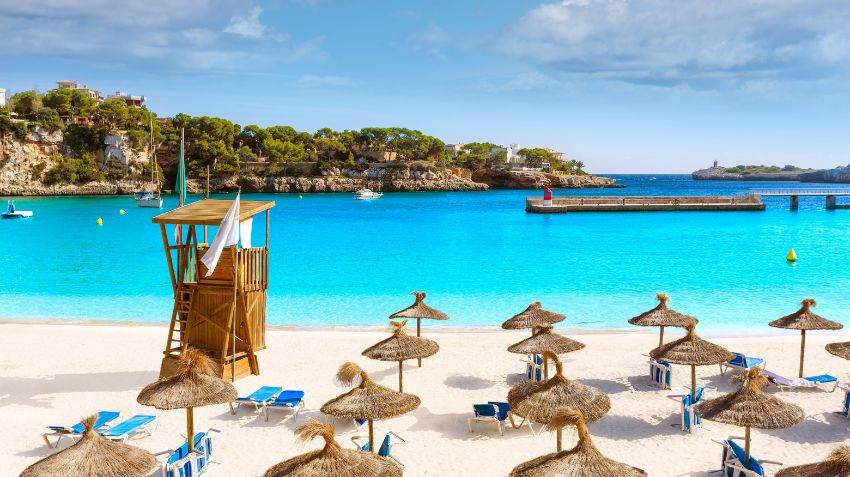
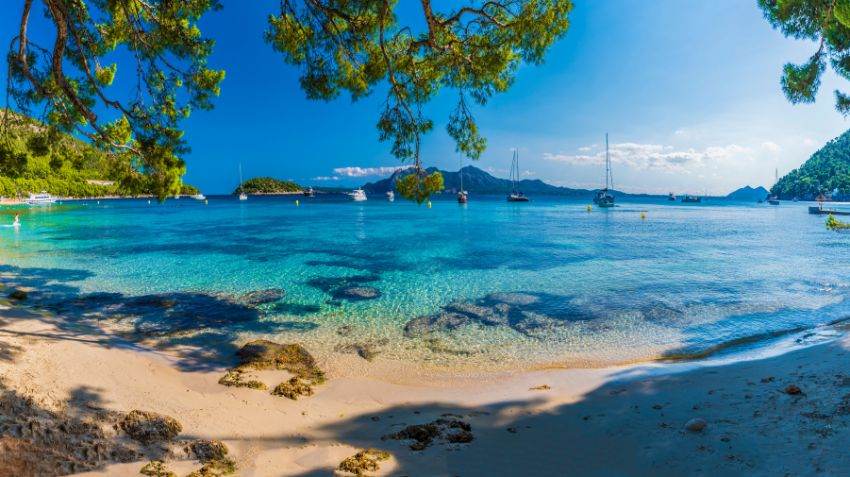
Palma de Mallorca in photos
Where to stay in Palma for couples, families and longer stays
The old town is the most practical base for a short visit of two or three nights where the goal is to experience Palma’s architectural and spatial identity directly. The cathedral, the Almudaina palace, the Arab baths and the main shopping streets are all walkable from any hotel inside it. In summer, mornings before nine are noticeably freer – the lanes at 08:00 have a different quality than they do at noon, and that morning window is one of the genuine pleasures of staying inside the centre rather than commuting into it.
If you are still planning the trip itself before choosing a neighborhood, the Palma de Mallorca first-time guide covers the city’s overall rhythm, transport, beaches and what to expect from a first stay.
Santa Catalina suits travelers who want a neighbourhood rhythm alongside the city’s main sights. If you cook occasionally, want to eat at genuinely local restaurants without planning in advance, or simply prefer a quieter street at 23:00, the area around the market delivers that without sacrificing access. Remote workers and slow travelers staying five nights or more tend to find the texture of daily life here more sustaining than the old town’s more tourist-concentrated centre.
El Terreno fits travelers who want the city at arm’s length – people who have been to Palma before, or who are using it as a base for island day trips and want somewhere calm to return to in the evening. It is not where you want to be on your first night if you are still trying to orient yourself. For longer stays or return visits, the quieter pace is a real asset rather than a compromise.
The Paseo Marítimo works well for travelers who want the seafront as a primary feature – morning runs along the water, evenings facing the harbour, the visual scale of a marina as the backdrop. It is slightly further from the old town’s interior streets on foot, though a taxi or a short bus covers the gap quickly. Families who want the easier logistics of a large hotel, ground-floor access and the sea nearby often find it the most comfortable base in the city.
Where to stay in Palma de Mallorca in summer
The city’s movement in August follows a predictable arc. Mornings before ten are the operative window for the old town – the light is best, the lanes are navigable, and the cafes have actual seats. By midday the seafront promenade and the streets around the cathedral are at their fullest. The city doesn’t close down in the afternoon the way Seville or Granada does, but it slows – stone surfaces hold the warmth into the evening, and the second wave of energy arrives around 21:00 when the terraces fill again and the air cools enough to make outdoor sitting pleasant rather than something to get through.
This two-beat rhythm – morning and late evening – shapes how the different areas function as bases. Staying in the old town means the morning window is directly on your doorstep, which has real value if you only have a few days. The area around Santa Catalina sits slightly west of the main old town flow, which means it picks up the evening restaurant energy without carrying quite as much midday throughput in the lanes directly outside.
For the seafront and El Terreno, the relevant rhythm is the evening promenade: Palma’s waterfront from around 20:00 is one of the city’s genuinely pleasurable movements, with people walking from the old town west toward the marina as the light changes over the water. Staying on or near the Paseo Marítimo means that evening walk begins outside your door. Staying in the old town means walking out to it, which takes maybe fifteen minutes and is worth doing regardless of where you are based.
Travelers weighing this against a second Spanish coastal city often find it useful to read the Granada neighbourhood read alongside – the pacing logic is structurally similar (historic core, quieter residential flanks, heat-driven timing), though the atmospheres are entirely different.
Best day trips from Palma de Mallorca
Palma works well as an island base because it has the infrastructure – transport connections, restaurant range, accommodation variety – that smaller towns can’t sustain over a week. The train to Sóller runs from the central station and takes around an hour, arriving in one of the most attractive towns on the island with a secondary tram connection down to the port. It is a genuine piece of infrastructure that happens to be beautiful, and the morning departure puts you there ahead of the midday visitor wave.
Valldemossa is closer and driveable in under thirty minutes from the city centre, though the road requires attention on the descent. Alcúdia and the northern coast are further, usually worth a full day. For beach access without leaving the city, the Cala Major and Illetes stretches west of the centre are reachable by bus and have a less compressed beach rhythm than the closest urban options.
The city’s own urban beach at Can Pere Antoni is two minutes’ walk from the Paseo Marítimo and serviceable for an early morning swim before the day begins.
For travelers already thinking about the island’s quieter side – the west coast inlets, the Serra de Tramuntana villages – the question of which base in Palma to choose becomes less important than simply having somewhere central enough to leave from. Any of the four main areas covers that function equally well.
If you are comparing Palma against other Spanish coastal cities for a similar trip, the Marbella first-time guide covers a different version of the south-coast base logic – the resort infrastructure, the access pattern and the urban rhythm are quite different from Palma’s more city-shaped experience.
See which traveler profiles fit this destination
Which area of Palma de Mallorca is best to stay in?
The best areas to stay in Palma de Mallorca are ultimately about rhythm more than proximity. For a first visit of two or three nights, the old town gives you the most direct experience of the city’s spatial identity and the morning window at its most immediate. For a longer stay – five nights or a week – Santa Catalina’s market rhythm and lower-key evening character tend to sustain more naturally, without the sense that you are always inside the main visitor corridor.
El Terreno suits return visitors and people who want the city at a quieter register. The Paseo Marítimo suits those who want the seafront as their daily anchor and are happy to move into the centre deliberately rather than stumbling into it on a walk.
None of these is a wrong choice. Palma is compact enough that the differences are felt rather than inconvenient, and the city’s two-beat summer rhythm – early morning and evening – makes almost any central base workable if you align the day to the light and the temperature rather than fighting either. The version of Palma that stays with people is usually the 08:00 one and the 21:30 one. Where you sleep mostly determines which of those feels effortless and which requires a small deliberate walk.
Palma de Mallorca areas FAQ: best neighbourhoods, first visit, family stays, quiet sleeping and seasonal timing
1. What is the best area to stay in Palma de Mallorca for a first visit?
The old town (Casc Antic) puts you closest to the cathedral, the main squares and the seafront, making it the most practical base for a short first visit. Santa Catalina works well too, with a slightly more neighbourhood feel and some of the best eating in the city a short walk from the centre.
2. Is Santa Catalina good for staying in Palma?
Santa Catalina is one of the more rewarding places to be based in Palma, particularly if you plan to eat well and want a street-level rhythm rather than a hotel corridor. The market is a genuine anchor for the morning, and the walk into the old town takes around ten minutes.
3. Where should families stay in Palma de Mallorca?
Families tend to find the Paseo Marítimo area and the neighbourhoods just west of the old town the most practical, with wider pavements, easier access to the seafront and a calmer pace after dark. The old town itself is walkable but the cobbled lanes and evening noise can make it a less straightforward base with children.
4. Which area of Palma is quietest for sleeping?
El Terreno and the residential streets behind Santa Catalina are noticeably quieter at night than the core of the old town, where terraces and pedestrian traffic carry until late. Both still give easy access to the centre, usually within fifteen minutes on foot or a short taxi ride.
5. When is the best time to stay in Palma de Mallorca?
Late April through early June and September into October tend to give the best version of the city: the light is good, the old town is walkable at most hours, and the seafront promenade has its evenings back. Summer is fully alive but the old town runs at its most concentrated rhythm, and mornings become the best window for moving freely through it.