
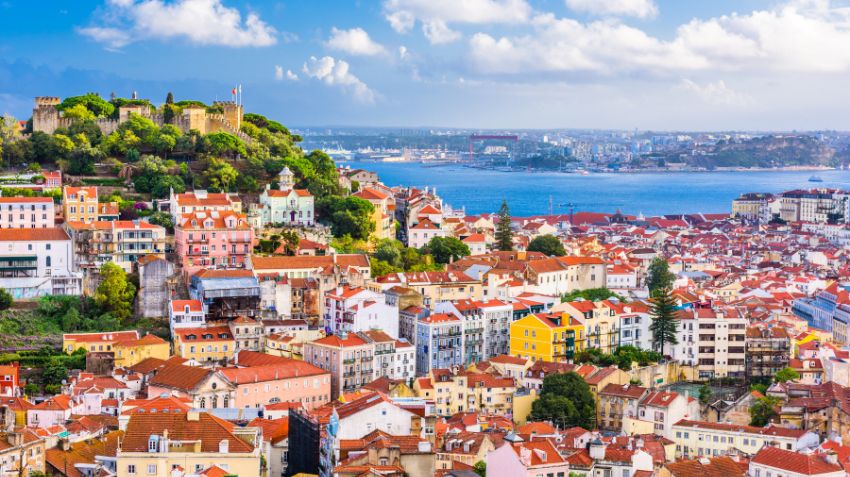
Portugal’s two most-visited cities sit about 370 kilometres apart and feel even further in character. Lisbon is a capital with Atlantic light, steep tram lines and a restaurant culture that starts late and runs later. Braga is quieter, older in feel, and has the kind of granite-paved centre where a morning coffee drifts naturally into a slow walk and then, somehow, into lunch.
Both cities reward time spent without an agenda, but they reward it differently. Lisbon pulls you outward, toward neighbourhoods that shift in character every few hundred metres, toward ferries across the Tagus, toward Belém on a quiet Tuesday morning when the pastéis de nata are still warm. Braga pulls you inward, into a smaller circuit of baroque churches, university-adjacent cafés, and evenings on the Praça da República that don’t start until well after 21:00.
In summer, the contrast between them becomes more pronounced. Lisbon is one of Europe’s warmest capitals and it knows it. Braga stays a few degrees cooler, with an evening breeze that makes outdoor dining feel natural rather than heroic. That temperature difference alone shifts the rhythm of the day.
What Braga and Lisbon each feel like for first-time visitors
Lisbon has a texture that takes a day or two to settle into. The hills between Bairro Alto and Alfama create a city that doesn’t reveal itself in straight lines. You climb something, find a miradouro with an unexpected view over orange rooftops and the river below, and then spend the next twenty minutes working out how to get back down by a different route. The metro is clear and functional, but the city’s real character lives above ground, in the tram lines and the walks between them.
The Alfama district smells of grilled fish by noon and fado by night. Príncipe Real has a Saturday market that fills a shaded garden with ceramics vendors and slow browsers. Belém, further west, earns its thirty-minute tram ride for the light on the river at low tide. These are not the same city. They’re several cities folded into one.
Braga is a different kind of reading. The historic centre compresses easily into a single day on foot, which sounds like a limitation but actually makes the city more inhabitable. You’re not chasing coverage. You’re sitting longer somewhere, noticing that the café on the corner of Rua do Souto has an espresso that the one two streets over doesn’t match.
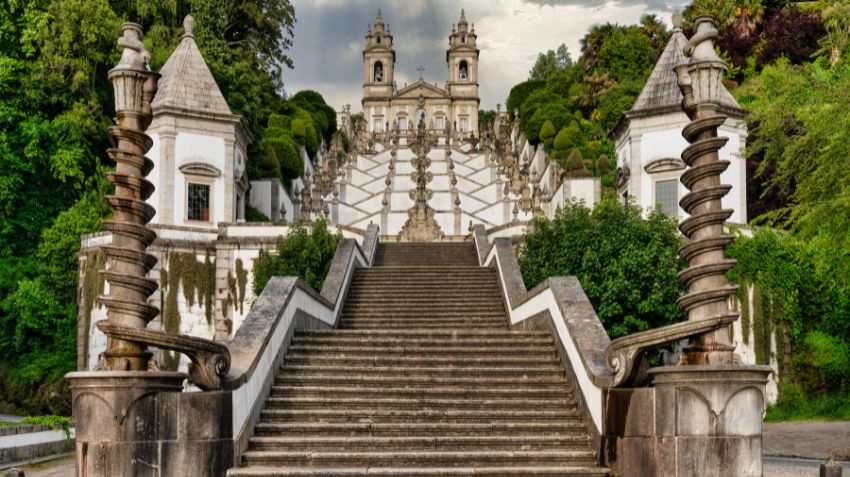
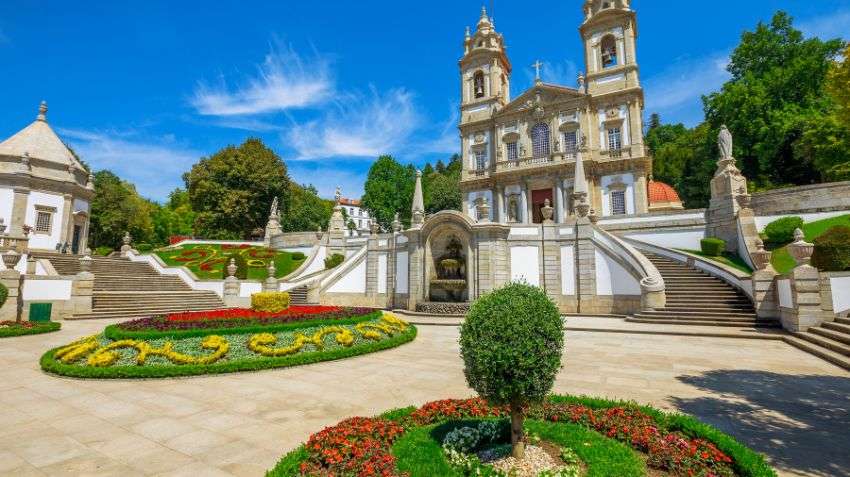
The Sé Catedral anchors the centre, and the gardens of the Palácio do Raio offer a quieter version of the city’s baroque ambition at an hour when most tourists are still at breakfast. Bom Jesus do Monte, the terraced sanctuary above the city, is worth the funicular ride and even more worth the walk down afterward, when the crowds have thinned and the stone steps hold the afternoon warmth.
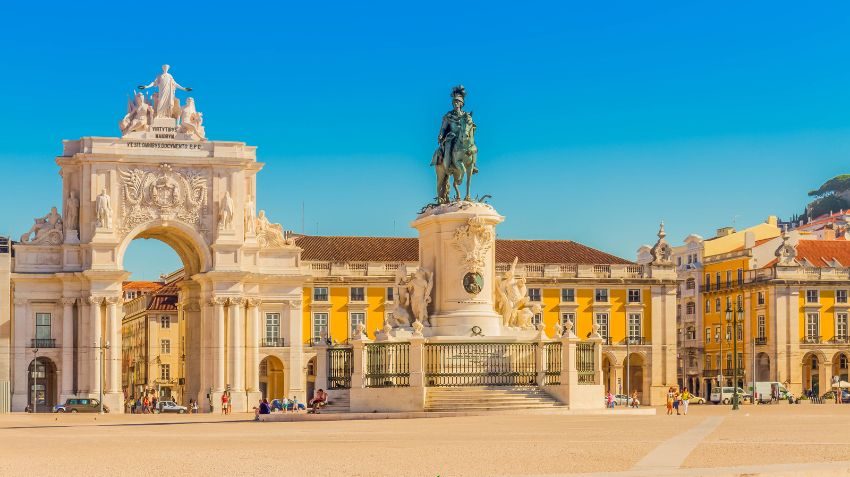
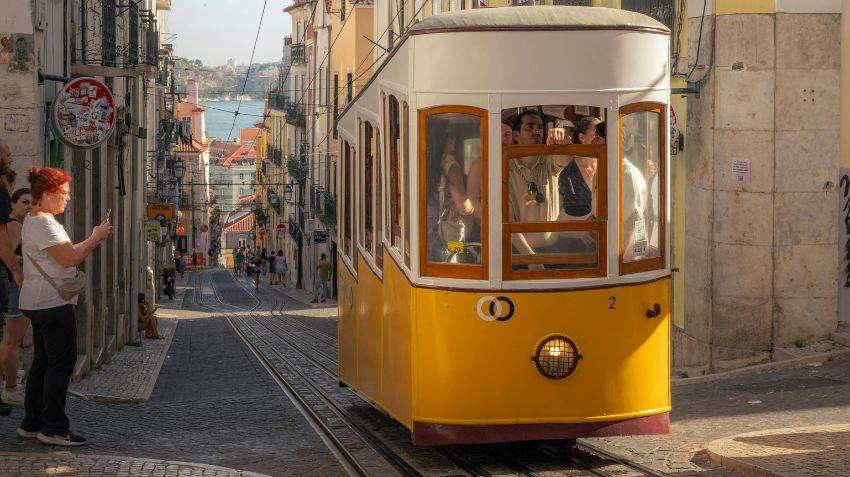
Braga in photos
Braga or Lisbon: which city suits your travel style?
Lisbon suits travelers who want range. The city has enough variation in neighbourhood character, enough day trips within reach, and enough late-night energy to fill five days without repetition. It works for couples, solo travelers, and anyone arriving in Portugal for the first time who wants to understand why this country has a particular pull on slow travelers. It also works, importantly, as the kind of city where you can be very active or very passive depending on the day, and both feel like the right choice.
Braga suits a different traveler, or the same traveler at a different moment. If you’re pairing Portugal’s north with Porto and want a stop that offers genuine character without Porto’s increasing visitor activity, Braga gives you that. It suits people who find capital-city noise slightly relentless by day three.
It suits solo travelers who prefer a city where you can eat dinner at a table next to locals without the restaurant being half-full of people on guided tours. The first-time Braga guide goes deeper into how that slower register actually plays out across a two-day visit.
Where Braga fits less well: travelers who want nightlife, a wide coastal day-trip circuit, or a single-city base for a Portugal trip that covers a lot of ground quickly. For that kind of pacing, Lisbon is the more functional anchor.
If Lisbon already feels like the right match, the Lisbon travel guide explains how to structure your first visit beyond this comparison.
How pacing and movement work differently in each city
Lisbon’s metro covers the main visitor corridors clearly, but the city’s hills mean that moving between some neighbourhoods involves more gradient than the map suggests. The walk from Cais do Sodré to Alfama, for example, passes through Baixa and then climbs toward the castle in a way that feels longer than it looks on any transit app. By late afternoon in summer, the south-facing streets of Alfama retain the day’s warmth well past sunset, which shifts the most comfortable walking to the shaded western slopes of Bairro Alto or the riverside promenade along the Tagus.
If choosing where to stay in the capital is your next decision, the Lisbon neighborhood guide compares the city’s main districts by atmosphere and traveler fit.
Braga, by contrast, is walkable in a way that doesn’t require planning. The core runs from the cathedral to the old town’s eastern edge in under fifteen minutes on the flat. The buses exist, taxis are easy to find, and ride-hailing apps work reliably, but most visitors won’t need any of them for the central circuit. The distances are short enough that even a warm July afternoon doesn’t make movement feel like an event.
Getting between the two cities involves Porto as a practical midpoint. Direct trains run from Lisbon’s Santa Apolónia station to Porto Campanhã, and from Porto the connection north to Braga takes about 50 minutes. It’s a natural two-stop structure rather than a linear drive, which is worth considering when planning the sequence. If you’re weighing the northern section of that trip, the Braga or Porto comparison sits on exactly that decision, covering how the two northern cities differ in tone for the same trip window.
Summer in Braga and Lisbon: crowd patterns and where to slow down
Lisbon in July is busy in the way that any popular European capital is busy in summer – concentrated at the obvious pressure points, thin two streets back. The Jerónimos Monastery and the Torre de Belém peak before noon; arriving at either by 9:00 is meaningfully different from arriving at 11:30. Alfama’s main tourist corridor fills by mid-morning and stays full. But the city also has enough quieter corners – Mouraria in the early morning, the Intendente square on a weekday afternoon, the viewpoint at Graça before the tour groups arrive – that summer doesn’t make Lisbon feel quieter.
Braga in summer is calmer by comparison. The city has a significant university population that thins out in July and August, which paradoxically quietens some of the local restaurant trade but makes the historic centre more comfortable to walk through. Evenings around the main square stay lively – the outdoor tables fill and the city’s younger population is out until late – but the midday hours carry a different quality to Lisbon’s. The stone surfaces stay warm, the streets hold the heat, but the scale of the city means there’s always a shaded arcade or a garden courtyard within easy reach.
Travelers who find Lisbon’s summer density more than they expected often recalibrate northward for their next Portugal trip. The southern coastal alternative, if you want a slower register at a different latitude, sits in the Faro first-visit readwhich covers Portugal’s Algarve base with a similar traveler-fit focus.
Is Braga or Lisbon the right call for your first Portugal trip?
For most first-time visitors, Lisbon earns its position as the primary entry point. It has the range, the transport infrastructure, the day-trip circuit, and the atmospheric variety to anchor a Portugal trip of almost any length. That’s not a generic recommendation – it’s a structural one. Lisbon genuinely covers more experiential ground per day than Braga does, and for a first visit to the country, that coverage matters.
Braga earns its place as a companion stop, not a replacement. Two nights in Braga alongside three or four in Porto gives the northern leg of a Portugal trip a different texture, one that’s closer to how the country actually lives away from its tourist circuits.
The Braga or Lisbon question, ultimately, tends to resolve as “both, in the right order” rather than “one or the other.” Lisbon first, for the range and the southern rhythm. Braga after, for the kind of unhurried afternoon that makes Portugal worth returning to.
If you’re building a complete Portugal route rather than choosing a single city, the Portugal itinerary guide shows how Lisbon, Porto, Braga, Coimbra, and Faro fit into one trip.
If you’re building the northern leg of a Portugal trip and want to understand how Braga and Porto divide between them, the Braga or Porto comparison covers the same traveler-fit logic at that scale.
Where the fit shifts: travelers on a very short trip (three nights or fewer) should anchor in Lisbon and leave Braga for a future visit. The logistics of adding Braga to a short trip reduce the time available in both cities to less than either deserves.
Braga vs Lisbon FAQ: first visit, pace, summer timing, trip structure and traveler fit
1. Is Braga or Lisbon better for a first visit to Portugal?
It depends on the kind of pace you want. Lisbon gives you more to do in a shorter window and suits travelers who want variety, a lively evening scene and easy day trips. Braga suits first-timers who prefer a slower, more local-feeling city without the density of a capital, and works especially well if you plan to use Porto as your main base for the north.
2. Is Braga worth visiting compared to Lisbon?
Braga is worth it if Lisbon’s summer rhythm starts to feel like too much. The city has its own architectural weight, a university atmosphere, and a quieter pace that some travelers find more comfortable than Lisbon’s dense tourist corridors. It works particularly well as a two- or three-night stop alongside Porto rather than a direct swap for Lisbon.
3. How many days do you need in Braga and Lisbon?
Most travelers find two to three nights in Lisbon and one to two nights in Braga a natural rhythm for a first visit. Lisbon has enough range to fill four or five days if you include Sintra and Belém, while Braga is more compact and most of its historic centre settles into a single full day with time left over for Bom Jesus do Monte.
4. What is the best time of year to visit Braga and Lisbon?
May, June and September tend to work best for both cities. Braga’s Semana Santa in spring brings its own atmospheric intensity, while Lisbon peaks in July and August when coastal crowds mix with the capital’s own visitor activity. Autumn brings both cities a slower, quieter version of themselves, with afternoon light that lingers on the old stone facades well into early evening.
5. Can you visit Braga and Lisbon on the same Portugal trip?
Yes, and the combination is logical. Lisbon works as the southern anchor, Braga as part of a northern leg alongside Porto, and the intercity train connections are direct enough to move between them without complicated planning. Most travelers do Lisbon first, then train north and split time between Porto and Braga before flying home – a structure that gives the trip two distinct atmospheric registers without requiring any backtracking.