
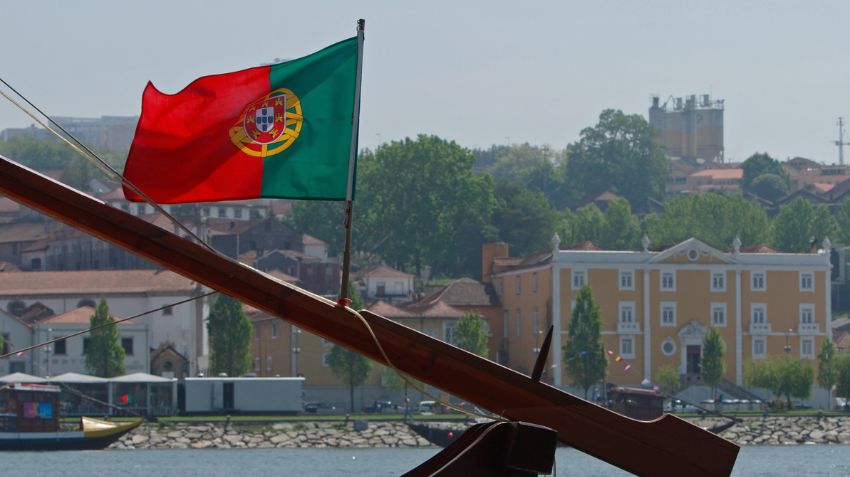
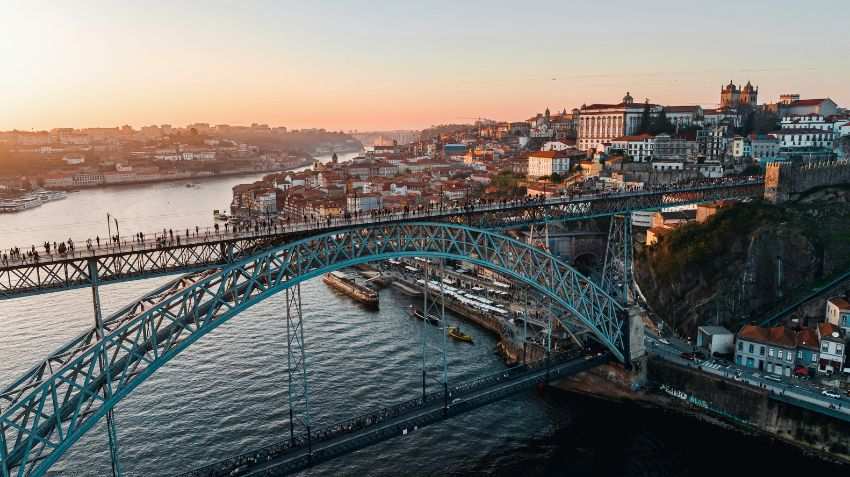
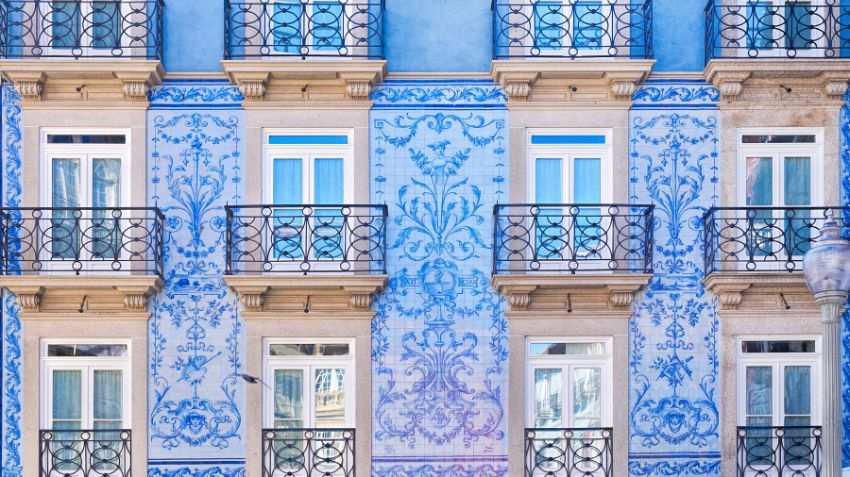
Porto arrives at full volume. The hillsides, the blue-tiled facades catching afternoon light, the Douro wide and slow below the Dom Luís bridge – the city announces itself quickly and doesn’t really quiet down.
Braga, an hour north by train, works on a different register. The squares are large and unhurried, the seminary students still drift through the streets near the cathedral, and a Tuesday evening in the centre feels like a Saturday evening somewhere less considered.
Both sit in northern Portugal, both have serious food cultures and late-dining habits, and both reward walking more than most cities their size. The differences emerge in scale, density, and how each city relates to its visitors – which in summer, when tourist activity peaks across the region, matters more than it might in October.
What Braga and Porto actually feel like in summer
Porto in July and August is confident and at full tempo. The Ribeira waterfront runs hot by early afternoon – stone walls absorbing heat, tour groups moving between wine cellars, restaurant touts at the doors.
It is genuinely alive, genuinely beautiful in that specific late-afternoon light on the river, and genuinely crowded in a way that requires some navigation. Two streets back from the water, the city settles. The Bonfim neighbourhood and the quieter streets behind Miragaia have a different texture entirely – locals’ cafés, morning bread, cats on warm stone steps.
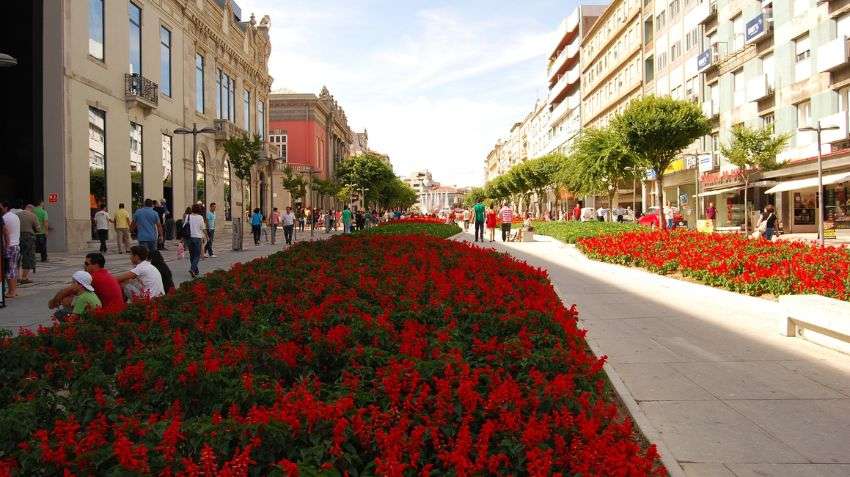
Braga in summer is noticeably calmer. The city has fewer international arrivals in proportion to its size, which means its historic centre – the Rua do Souto, the Largo do Paço, the Arcada passage – stays accessible at hours when Porto’s equivalent spaces are at their busiest. The heat is present and real, the same northern Portuguese summer; the spatial experience of moving through it just feels less compressed. Mornings near the cathedral are quiet enough that you can hear the fountain.
Evening is where both cities converge. Dinner before 20:00 is possible in either, but the rhythm suggests otherwise – locals eat later, the squares fill up around 21:00, and the night moves slowly toward midnight without any sense of urgency. Porto’s Cedofeita and Rua de Santa Catarina pull the social energy upward; Braga’s Praça da República holds a different kind of calm, with the café terraces filling gently as the light goes amber.
Braga and Porto in photos
Braga or Porto: which city suits your travel style?
Porto suits travelers who want a city that pushes back slightly – one with enough complexity and neighbourhood-level variation to reward staying five or six days without a feeling of repetition. The hilly terrain gives the walking a physical character that maps understate: the Escadas do Guindais, the climb from the river to the upper city, the descent through Vitória to the Clérigos tower. These are genuine gradients on a hot afternoon, and the city is structured around them in a way that makes every district feel like its own small world.
Braga suits travellers who want the northern Portuguese character – the food, the Romanesque architecture, the slow civic pace – without the density of a fully tourist-oriented city. Remote workers who want to settle for two or three weeks, couples who have already done Porto and want somewhere less itinerary-driven, solo travellers looking for a city that feels lived-in rather than curated. The university presence keeps the city young without making it performatively so.
The fit shifts if you are visiting Portugal for the first time and have limited days. Porto has more concentrated variety – enough distinct neighbourhoods, day trips, and food experiences to make a four-day stay feel genuinely complete. Braga rewards slightly more time, or a return visit, or a traveller who already knows what they are not looking for.
If Porto already feels like the stronger fit, the Porto travel guide explains how the city unfolds beyond this comparison.
How to move between Braga and Porto, and what that shapes
The train between Porto Campanhã and Braga runs frequently and takes around an hour on intercity services. It is one of the better intercity connections in northern Portugal – reliable enough that combining both cities in one trip is straightforward rather than logistically effortful. The question is less about whether to go and more about where to anchor.
Porto has urban metro infrastructure connecting the airport, the city centre, and the riverside at Vila Nova de Gaia, which makes arriving and moving around significantly easier than in Braga. Braga is served by city buses, taxis, and ride-hailing apps, and the historic centre is compact enough that most people walk it almost entirely. The lack of a metro is not a meaningful issue if you are staying central; it becomes relevant if you are lodged further out or visiting the Bom Jesus sanctuary on the hill east of the city.
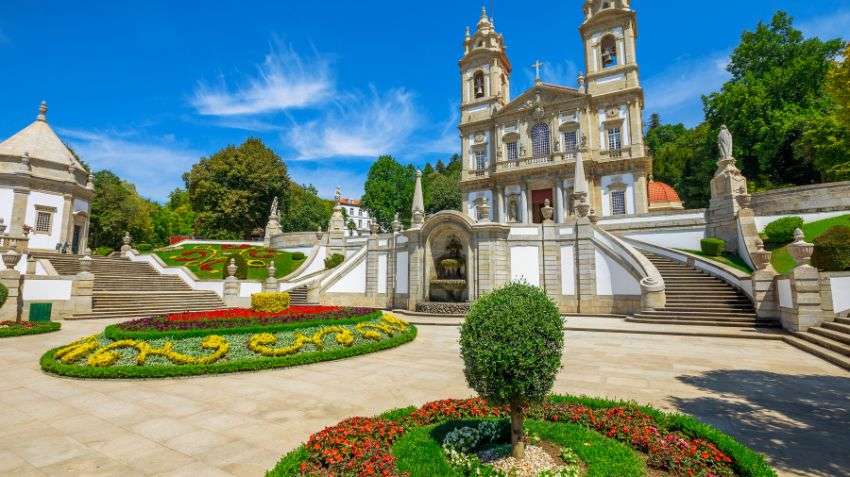
Bom Jesus, for what it is worth, is worth the climb or the funicular – one of the oldest funicular railways in the world, short, slow, and landing you at a baroque staircase with a view across the city that appears after the tree cover breaks. It is the kind of place that takes twenty minutes and stays in the memory longer than it should.
If choosing where to stay in Porto is the next step, the Porto neighborhood guide compares the city’s main districts by atmosphere and traveler fit. If the decision is expanding toward the rest of Portugal, the Faro or Coimbra comparison covers two very different southern and central options that fit naturally into a longer national itinerary.
Travellers combining both cities most often base in Porto and take Braga as a day trip or add one or two nights. The reverse works well too, particularly for those arriving from the north (from Viana do Castelo or Guimarães) and moving south toward Lisbon. The train sequence feels natural in either direction.
Day trips and nearby alternatives from both cities
Porto’s day trip range is substantial. Guimarães, considered the birthplace of the Portuguese nation, sits 45 minutes east and has a well-preserved medieval centre that contrasts quietly with Porto’s industrial and maritime character. The Douro Valley begins less than an hour inland – wine estates, terraced hillsides, and river views that make the drive (or the scenic train along the river) a full half-day at minimum. Viana do Castelo north along the coast is less visited and worth the hour on the train if coastal Atlantic character is what you are after.
From Braga, Guimarães is the obvious first move – only 25 minutes and culturally linked closely to Braga’s own history. The Peneda-Gerês National Park begins northwest of the city, Portugal’s only national park, with rivers, granite uplands, and trails that suit a full day or an overnight depending on pace. Neither Porto nor Braga needs to be a standalone destination; the density of the northwest makes almost everything within range.
If you’re planning a longer route through Portugal, the Portugal itinerary guide shows how Braga and Porto connect with Lisbon, Coimbra, and the Algarve.
Those weighing a longer stay in northern Portugal sometimes find that the first-time Braga read helps clarify whether the city earns its own two or three nights or works better as a day from Porto.
Is it worth choosing Braga over Porto, or combining both?
The Braga vs Porto decision usually resolves around what you want the dominant tone of the trip to be. Porto is the stronger solo destination if the trip is short – four or five days, first visit, or a traveller who wants density and variety as the base state. Braga is the better answer if you want a city that operates on its own terms, without orienting itself especially toward visitors, and where the café you sit in at 10:00 on a Wednesday morning is full of people with somewhere else to be afterward.
For those extending further south, the Porto budget and spending read covers the cost structure of Porto in detail, which is useful context before committing to a longer stay there.
For those eventually moving toward southern Portugal, the Faro neighbourhood guide covers a city with a very different rhythm and a useful entry point for the Algarve.
Both together is the most natural solution the geography offers, and the train connection makes it genuinely easy. Two nights in Braga, three or four in Porto, or the reverse – the cities complement each other in a way that makes a combined visit feel more complete than either alone. The northwest of Portugal rewards that kind of unhurried itinerary, and neither city asks you to rush.
Braga vs Porto FAQ: travel fit, distances, slow travel, atmosphere and combining both cities
1. Is Braga or Porto better for a first visit to Portugal?
Porto gives you more variety in a first visit – the riverfront, the historic centre, and the city’s hilly neighbourhoods each have a distinct character worth exploring. Braga rewards visitors who want a quieter, more local-feeling city with a strong historic core and less tourist infrastructure around every corner. Neither is a wrong choice; they suit different pacing preferences.
2. How far is Braga from Porto?
The train journey between Porto and Braga takes around an hour on intercity services, and there are frequent departures through the day. The connection is reliable enough that some travellers base in one and make a day trip of the other, though both cities reward at least one overnight stay to catch their evening rhythm.
3. Which city is better for slow travel – Braga or Porto?
Braga fits slow travel more naturally. The city has a walkable historic centre, a quieter pace, and fewer of the tourist-driven crowds that can compress Porto’s most visited streets in summer. Porto is manageable as a slow-travel base too, but you need to pick the right neighbourhood – somewhere slightly away from the Ribeira waterfront, where the city keeps a more ordinary rhythm.
4. What is the main difference in atmosphere between Braga and Porto?
Porto has a denser, more layered urban energy – the hilly terrain, the mix of old and new architecture, the waterfront alive with movement in the evening. Braga is quieter and more composed, with a historic centre that feels genuinely used by locals rather than arranged for visitors. Both cities have a late-evening culture built around food and conversation; the scale and intensity just differ significantly.
5. Can you combine Braga and Porto in one trip?
Easily. Most travellers base in Porto and take Braga as a day trip or add one or two nights there before or after. The reverse also works well if you prefer arriving into a quieter city first. The train connection makes the sequence flexible, and the two cities complement each other in character – one dense and complex, the other settled and calm.