
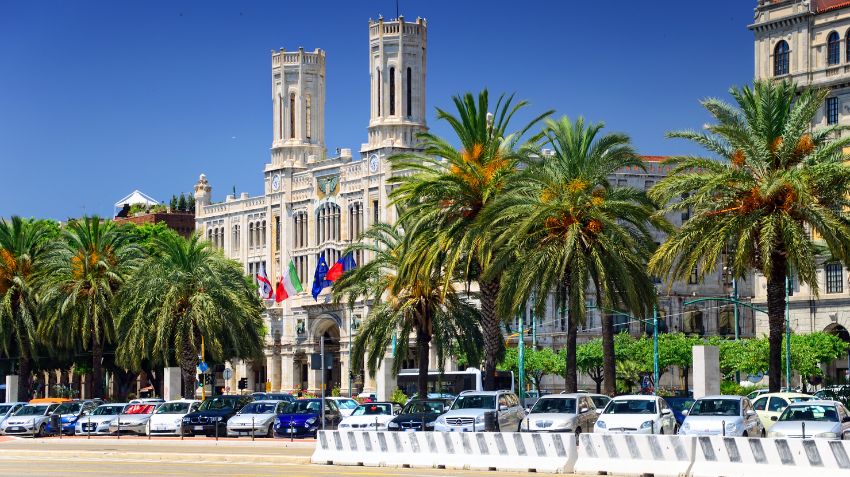
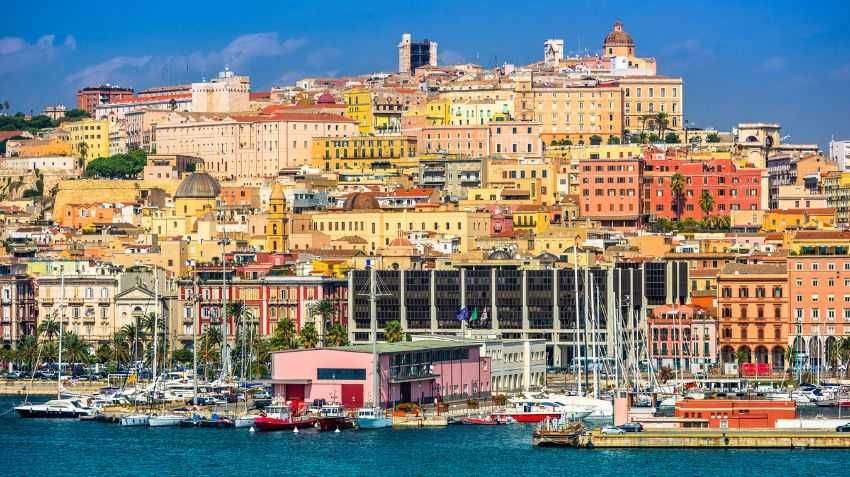
Cagliari feels effortless in a way few Mediterranean cities do. The old town rises above the waterfront, the sea appears between streets and viewpoints, and the city moves with the quiet confidence of a place that has never needed to perform for visitors.
Early autumn is when that rhythm is easiest to fall into. The sea is still warm, the crowds thin, and evenings stretch naturally from the waterfront into late aperitivo and dinners that only begin to fill after 20:30.
Compact enough to understand quickly but layered enough for several unhurried days, Cagliari offers a rare balance: beach, old streets and local life without the feeling that you need to chase any of them.
What Cagliari feels like for first-time visitors to Sardinia
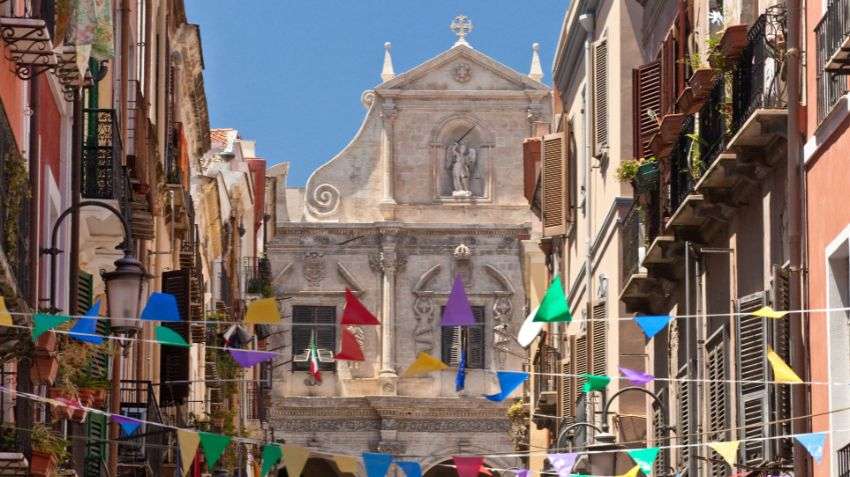
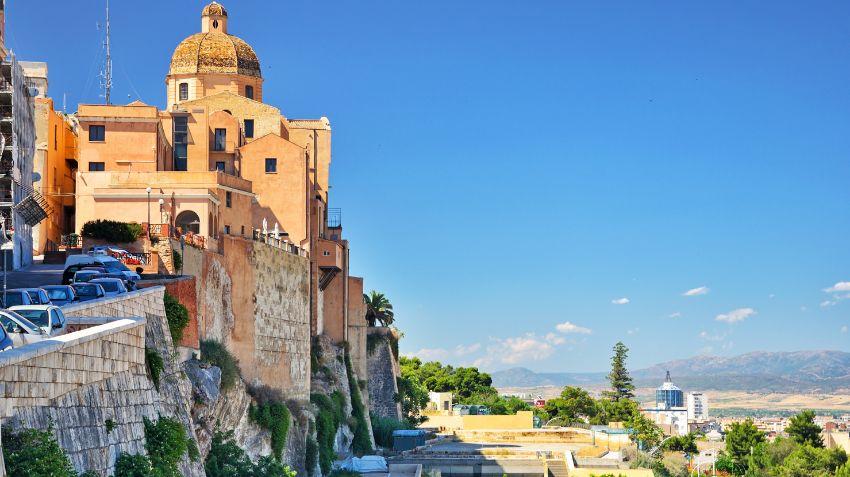
The city breaks into distinct zones that feel genuinely different from each other. Castello, the medieval quarter on the hill, has the elevated calm of a place that has been watching over the city for centuries. Narrow lanes, flat light on pale stone in the morning, the occasional view down to the port through a gap in the walls. It empties out by early evening, when most people drift back down to the seafront and the lower neighborhoods.
Below Castello, the Marina quarter runs along the waterfront with a density of bars, restaurants, and movement that makes it feel more like a small city than an island capital. Villanova, just adjacent, has a softer residential character — quieter streets, fewer tourists, a better-to-noise ratio if you want to sit outside in the evening without competition from the busier strips.
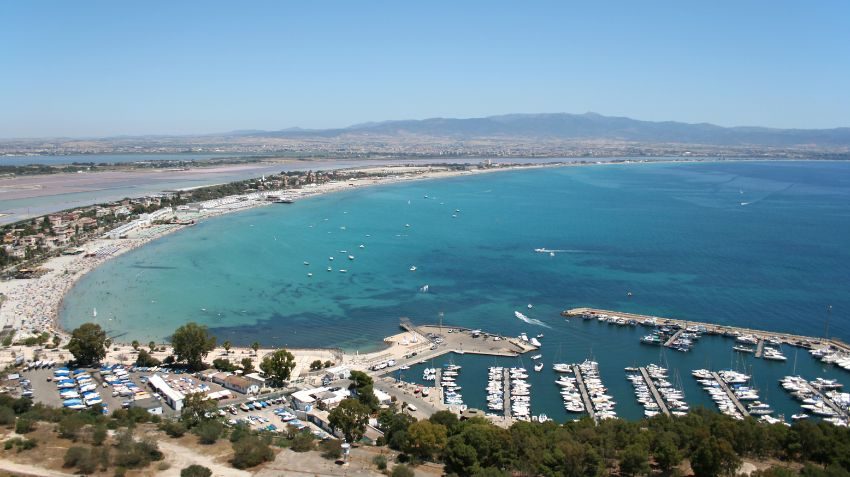
The seafront promenade, the Poetto beach to the east, the flamingo lagoon visible from the road to the airport — these are not decoration. They are genuinely part of the daily experience here. The city is physically generous with its surroundings in a way that makes even an ordinary afternoon feel like it has several options.
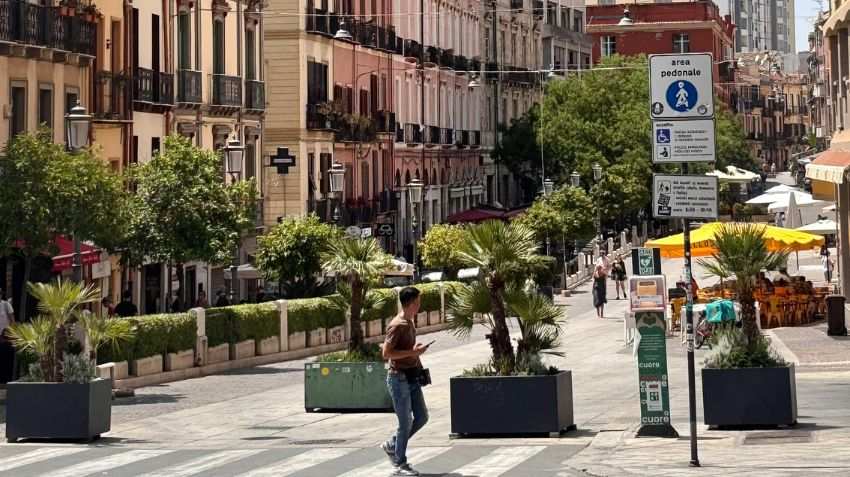
Cagliari in photos
Is Cagliari right for your travel style?
Cagliari suits travelers who do not need a constant programme. Days here tend to organize themselves around two or three things — a morning in Castello, a long lunch somewhere in the Marina, a late afternoon walk toward the sea or along the lagoon path — and that structure feels entirely satisfying rather than thin. The pace is southern Italian in the most genuine sense: meals matter, evenings matter, afternoons are negotiable.
It works particularly well for slow travelers, first-time visitors to Sardinia who want a base with real urban character rather than a resort, and anyone who has spent a week in Rome or Sicily and wants something quieter but still physically and gastronomically substantial. Solo travelers tend to settle in easily; the city is social without being dense, and the main squares and bars have a regularity that makes them feel familiar quickly.
Travelers comparing that slower island rhythm with a more intense southern Italian city can use the Naples first-time guide to see how the experience changes when street life, food and urban energy become a much larger part of the trip.
If you need a constant flow of major museums, world-famous monuments, or a nightlife circuit that runs past midnight, the fit shifts. Cagliari has culture and good evenings, but it is not a city that competes on those terms. The draw is more atmospheric than programmatic.
How to get around Cagliari as a first-time visitor
The central area is almost entirely walkable. From the Marina quarter to the base of Castello, to Villanova, to the main market at San Benedetto — all of these sit within a comfortable radius on flat or gently sloping ground. The climb up to Castello from the lower city is real, roughly 15 to 20 minutes on foot depending on which route you take, and the cobbled streets inside the quarter don’t reward wheeled luggage. Most people sensibly choose a hotel in the lower neighborhoods and make the walk up to Castello when they feel like it rather than hauling everything up once.
Cagliari Elmas airport is a short distance from the city. ARST buses connect the airport to the main station, and the journey is quick and straightforward. Taxis are available at the rank outside arrivals for anyone who prefers a direct transfer; the cost is modest by European standards. There is no airport rail link, but the bus and taxi options make the arrival path clear and uncomplicated.
City buses cover the wider urban area, including the route east to Poetto beach, which is the main reason most visitors use them. Ride-hailing apps also operate here for added flexibility. The ferry port in the Marina connects to the Italian mainland and to other Sardinian ports; if you are arriving by sea, the city opens up immediately on foot from the dock.
Day trips from Cagliari worth taking
The Nora archaeological site, roughly 40 kilometers southwest of the city, is one of the most complete Phoenician and Roman sites in the Mediterranean. It sits at the edge of a promontory with water on three sides, so the combination of actual ruins and the quiet coastal setting makes the trip feel different from a standard museum visit. Reachable by car or organized tour; public transport requires a connection at Pula.
The Costa del Sud, a stretch of coast running west along the southern edge of the island, rewards a half-day with a vehicle. The road follows the clifftops before dropping to several smaller beaches, most of them quieter than Poetto and with clearer water. In September, this stretch is close to ideal — the light has changed from summer’s full intensity, the sea temperature has not yet dropped, and the beaches are no longer full.
Travelers weighing a longer southern Italy loop alongside this stop will find that the southern Italy itinerary covering Naples, Palermo and the Amalfi Coast gives a useful sense of how Cagliari compares rhythmically to those mainland stops — useful if you are deciding whether to include Sardinia as a standalone or as part of a wider arc.
Inland, the Campidano plain and the Nuragic sites scattered across the island require more planning, but anyone with a particular interest in pre-Roman history will find the interior rewarding in a way that the coastal day trips are not.
If you are also considering Sicily as part of the same Tyrrhenian trip, the first-time Palermo read maps a city with a similar southern pace but a much denser urban core — useful comparison material for deciding how much intensity fits your trip.
If Palermo is becoming a realistic alternative rather than just a comparison point, the best areas to stay in Palermo helps narrow the choice by neighborhood and the kind of city experience you want around your accommodation.
See which traveler profiles fit this destination
Is Cagliari worth visiting for first-time visitors to Sardinia?
For a first-time traveler in Cagliari, the city earns its place on the itinerary not through a list of headline attractions but through the quality of an ordinary day. The old town in the morning, the market before the heat builds, a long lunch somewhere in the lower neighborhood, the sea visible from the table — these are the things that stay with people. It is not a city that announces itself. It reveals itself slowly, across two or three days, and that gradual process is exactly what makes it work for travelers who have arrived tired of being managed by their own schedule.
The early autumn window amplifies this. The city is at its most itself in September and October: genuinely warm, genuinely quiet relative to peak season, and still fully alive in the evenings. Travelers who fit the pace — unhurried, curious, comfortable with a slower-tempo southern Italian register — tend to leave thinking they should have stayed longer. That is a reasonable signal.
Travelers who find Cagliari’s rhythm suits them and are curious about comparable southern island dynamics might look at the Catania first-time base readwhich covers a city with more urban density and a faster tempo but a similar position as a gateway to coastal and volcanic landscape.
Cagliari first-time visitor FAQ: days needed, best time, neighborhoods, walkability and Sardinia fit
1. How many days do you need in Cagliari as a first-time visitor?
Three to four days gives a first-time visitor enough time to settle into the pace without rushing. The old town, the seafront neighborhoods, and at least one beach or day trip fit comfortably into that window, with time left for the slower rhythm the city naturally encourages.
2. What is the best time to visit Cagliari?
Late spring and early autumn are the most rewarding windows. From May through early June and from September into October, the sea is warm, the light is long, and the city moves at a pace that feels genuinely relaxed rather than compressed by peak-season arrivals.
3. Is Cagliari good for first-time visitors to Sardinia?
Cagliari works well as a starting point for Sardinia because it combines real urban character with easy access to beaches and the interior. It reads less like a resort and more like a functioning southern Italian city that happens to sit at the edge of a remarkable coastline.
4. Is Cagliari walkable for first-time visitors?
The central neighborhoods are very walkable. The Castello hilltop requires a climb from the lower city, but most of the seafront, the marina, and the main squares sit within a comfortable walking radius of each other, especially in the cooler morning and evening hours.
5. What neighborhoods should first-time visitors to Cagliari stay in?
Villanova and the Marina quarter are the most comfortable bases for a first visit. Villanova is quieter, with a residential feel and good restaurant access; the Marina sits closer to the waterfront and the ferry port, with a livelier evening atmosphere and easy access to the main sights.