
Utrecht has a way of arriving quietly. The train pulls into one of the busiest rail junctions in the Netherlands, the station concourse is large and a little disorienting, and then within ten minutes of walking toward the old town the city contracts into something much more contained, much more human in scale.
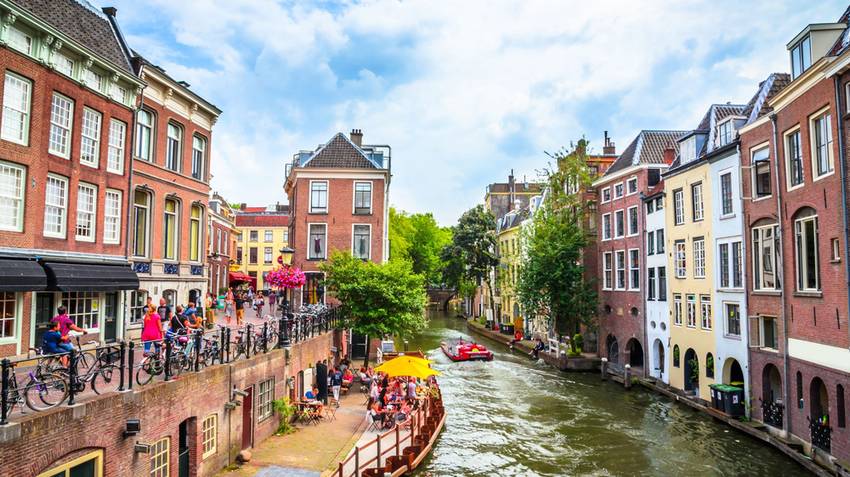
The canals here run below street level, not beside it, which means you find the cafes and restaurant terraces by descending a set of stone steps rather than walking past them. That small difference in geography changes how the city feels entirely.
For anyone working through a first-time traveler guide to Utrecht, the most useful framing is probably this: Utrecht is not Amsterdam at a smaller scale. It is a different kind of Dutch city, with a different rhythm, a different social density, and a different relationship between its residents and its visitors. The balance tilts considerably more toward the former. Students from Utrecht University are visible throughout the city’s daily life in a way that keeps things grounded and unpretentious, and the evenings on the Oudegracht canal have a local quality that most Dutch tourist centres have long since lost.
Summer is when Utrecht works at full tilt outdoors. The canal terraces fill from mid-afternoon, cyclists move in steady streams along the upper quays, and the long northern evenings mean that the city stays animated well past 21:00 without feeling particularly late. The historic centre is compact enough to cover on foot, and the surrounding neighbourhoods shift gradually from canal-house density to quieter residential streets within a few minutes’ walk.
What Utrecht actually feels like to walk through
The Oudegracht is the axis that most first visits organise around, and for good reason. The canal runs through the centre of the old town on two levels: the upper quay for cyclists and pedestrians, the lower wharf-level for cafe terraces that sit almost at the water’s surface. In summer, those lower terraces are where the city’s afternoon drift happens. People linger over coffee that becomes a glass of wine that becomes dinner, with the canal alongside and the stone arches of the bridges overhead. It is a specific kind of sociability, unhurried and fairly dense without ever feeling overwhelmed.
The Dom Tower frames the city’s skyline and the Domplein square below it is the geographic centre, though the square itself is more of a gathering point than a destination. The more interesting movement happens in the streets immediately around it, particularly heading north toward the Neude or west through the narrow lanes toward the Oudkerkhof. This part of the city is walkable enough that a day of unhurried exploration rarely asks much of the body, though the cobbled surfaces around the Dom and along the older canal streets are worth knowing about if you’re pulling luggage.
Two or three streets north of the main canal axis the tourist density drops noticeably. The neighbourhood of Wittevrouwen, for instance, has a different texture entirely: quieter, more residential, with independent shops and cafes that operate at a pace more typical of a Dutch university town than a heritage tourist zone. This is where the city’s scale becomes genuinely legible.
Travelers who discover they enjoy this neighborhood-first way of experiencing a city often find the Eindhoven neighborhood guide useful as another example of a Dutch city where daily life shapes the experience more than major attractions.
Who this city suits, and who will find it too quiet
Utrecht tends to work well for travelers who find Amsterdam stimulating but would prefer to be based somewhere they can decompress in the evenings. It suits solo travelers who want enough urban density to feel active but not so much that every meal and cafe requires a queue. Couples on a slow trip, remote workers planning a week-long base, and anyone who finds themselves preferring a good neighbourhood bookshop to another tourist attraction will find Utrecht easy to live in.
It is less suited to travelers who need a high volume of nightlife options or who are primarily motivated by museums and major cultural institutions. Utrecht has both, but neither in the concentration that Amsterdam or Rotterdam offer. The Centraal Museum and the Rietveld Schröder House are serious visits, but if the trip is built around consecutive museum days, the city’s offering is thinner than its size might suggest. Similarly, travelers who want beach access or waterfront scenery of the coastal variety will find the Netherlands generally requires a different base.
Pacing a first visit: how days actually unfold
Most first-time visitors arrive by train, which means the day starts at Utrecht Centraal. The station is large and slightly maze-like, particularly around the shopping mall that occupies the lower levels, so building in a few extra minutes for orientation on arrival is worth it. The walk from the station to the Oudegracht takes about ten minutes on a direct route, a little longer if you take the more interesting path through the Vredenburg square area.
Mornings in the centre are quiet. Cafes open from around 08:00 or 09:00 but the streets stay calm until late morning, which makes it the right time to visit the Dom Tower interior or walk the older canal streets without much company. The Dom Tower visit itself requires a timed ticket, and the queue at the entrance builds noticeably by midday in summer, so early arrival matters practically.
The afternoon shifts toward the water. Canal terraces start filling from around 14:00 in good weather, and the city develops a slow, sociable energy that carries through to the evening. Dinner options along the Oudegracht and in the streets around the Neude range from Dutch cafes to Middle Eastern and Indonesian kitchens, reflecting a culinary mix that is one of the more honest windows into the city’s actual demographics. Kitchens in Utrecht generally stay open until 22:00 or 22:30, later on weekends.
A second day is worth spending in at least one neighbourhood beyond the historic core. The Lombok area, west of the station, has a concentration of North African and Turkish food shops and a street market feel that sits completely differently from the canal district. East of the Dom, the Wittevrouwen and Vogelenbuurt neighbourhoods reward slower walking and have the kind of cafe density that makes lingering easy. Neither requires transit; both are within 15-20 minutes on foot from the Oudegracht.
Utrecht within the Dutch city network
Utrecht’s position at the centre of the Dutch rail network means it functions naturally as a base for wider exploration. Amsterdam is 25-30 minutes by direct intercity train and runs every 15 minutes throughout the day. Rotterdam is similarly close, around 40 minutes. The Hague, Eindhoven, and Arnhem are all under an hour. For travelers doing a first loop of the Netherlands, Utrecht is often a more considered choice as a base than Amsterdam, primarily because accommodation is less expensive, the city is more liveable day-to-day, and the rail connections make day trips straightforward in any direction.
The comparison with Amsterdam comes up often for good reason. Travelers who find the Amsterdam first-time visit overwhelming in terms of pace, tourist volume, or cost will often find Utrecht restores something they were looking for. The two cities are not interchangeable, but the distance between them is short enough that spending two nights in each tells a clearer story about Dutch urban life than six nights in one.
The accommodation decision becomes easier once you understand how different Amsterdam’s districts feel from one another. The Amsterdam neighborhood guide breaks down the areas most first-time visitors end up considering.
Rotterdam sits at a different register again, more contemporary in its architecture, larger in scale, and with a port-city energy that Utrecht does not share. Travelers weighing a longer Dutch itinerary and trying to decide how to distribute their nights will find the Rotterdam neighbourhood guide useful for understanding how the two cities compare in terms of pacing and traveler fit.
For a first visit to the Netherlands, the combination of Utrecht as a base, Amsterdam as a day trip, and Rotterdam as an overnight gives a more complete picture of the country than any single city can offer.
Seasonal notes for the summer visit
June through August is when Utrecht is most visibly itself as an outdoor city. The canal terraces are in full operation, the street markets around the Vredenburg and Breedstraat are active, and the long evenings mean the city stays comfortable and animated until well past 22:00. The summer also brings more day-trippers from Amsterdam, particularly on weekends, which concentrates foot traffic around the Dom Tower and the main Oudegracht stretch between midday and early evening.
That mid-afternoon peak along the central canal corridor is worth knowing about but rarely constitutes a reason to avoid the area. It is more of a cue to shift timing: mornings and later evenings on the Oudegracht have a noticeably different texture from the peak midday window. The side streets and smaller canals running parallel to the Oudegracht remain quieter throughout the day.
Autumn brings a different quality of light over the canals and a perceptible drop in visitor volume from September onward. The city’s student population returns in force, which changes the cafe and bar atmosphere toward something more local and less tourist-adjacent. Travelers who are flexible on timing and want to see Utrecht at a more representative version of itself often find September and October more satisfying than July.
What Utrecht is, on its own terms
A first visit to Utrecht rewards travelers who arrive without a fixed agenda and leave before the city has fully resolved itself. Two nights is enough to understand the rhythm; three nights is enough to start feeling at home in it. The canal-level terraces, the Dom at the centre, the student-city texture just beneath the historic surface, and the ease of reaching the rest of the Netherlands from its rail hub make Utrecht a destination that works as a standalone trip or as an anchor for a wider Dutch circuit.
It suits travelers who are comfortable letting a city’s pace set their own, rather than the reverse. The first-time traveler guide to Utrecht essentially comes down to this: arrive, walk toward the water, descend the steps, and let the afternoon do the rest of the work.
Frequently asked questions about visiting Utrecht for the first time
1. How many days do you need in Utrecht as a first-time visitor?
Two full days is enough to cover the historic centre without rushing. A third day lets you slow down, explore neighbourhoods like Wittevrouwen or Lombok, and spend a longer evening on the canal terraces. Visitors who try to do Utrecht as a half-day trip from Amsterdam consistently feel they arrived just as the city was starting to make sense.
2. Is Utrecht worth visiting if you’ve already been to Amsterdam?
Utrecht has a different register entirely. The canal system runs below street level, which gives the city an unusually intimate scale, and the pace is noticeably quieter than Amsterdam even in summer. For travelers who found Amsterdam too stimulating or too crowded, Utrecht tends to feel like a more liveable version of the same country.
3. What is the best time of year to visit Utrecht for the first time?
Late spring and early autumn offer the clearest combination of good weather and manageable crowds. Summer works well for canal terraces and long evenings, though July and August bring more day-trippers around the Oudegracht. The winter months are quiet and atmospheric, with the canal lighting adding a specific kind of stillness to the city after dark.
4. How do you get to Utrecht from Amsterdam?
Direct intercity trains run every 15 minutes from Amsterdam Centraal to Utrecht Centraal, with a journey time of around 25-30 minutes. Utrecht Centraal is the largest rail junction in the Netherlands, so connections from other Dutch cities are equally straightforward. Arriving by train drops you close to the old town on foot.
5. What neighbourhood should first-time visitors stay in Utrecht?
The area around the Oudegracht and the Neude square puts you within easy walking distance of almost everything and places you inside the city’s evening rhythm from the first night. Travelers who prefer slightly quieter surroundings often land in the streets east of the Dom, where there are fewer bars and a calmer texture to the mornings, but the same ease of movement through the city.