
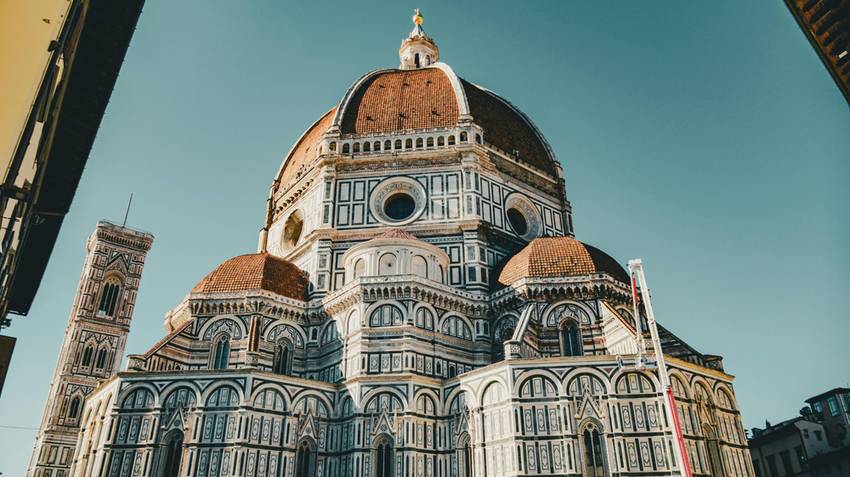
Florence in late spring has a particular quality in the early morning, before the crowds have organized themselves. The streets around Santa Croce are still cool, the light is low and angled, and the stone feels like it belongs to the city rather than to tourism. This is the version of Florence that first-time visitors sometimes miss if they arrive with a packed itinerary and no room to drift.
A first-time traveler guide to Florence tends to focus on what to see. This one is more interested in how the city actually behaves, and whether it will suit you. Florence is not a relaxing destination in the conventional sense. It is one of the most art-dense cities in Europe, compressed into a walkable historic center, and the summer months are approaching with their full weight of visitors. But it is also a city with a rhythm that rewards patience, and for the right traveler, even a first visit can feel unhurried.
Understanding that rhythm before you arrive changes the whole experience.
What Florence actually feels like on the ground
The historic center is smaller than most people expect. The Duomo, the Uffizi, the Accademia, Ponte Vecchio: these are not spread across a large urban area. They are stacked on top of each other, essentially, in a zone you can cross on foot in under twenty minutes. That density is part of what makes Florence extraordinary and part of what makes it tiring.
Between roughly 10am and 3pm, the main tourist corridor reaches its peak intensity. The area between Piazza del Duomo and Piazza della Signoria fills up fast, and the Ponte Vecchio becomes a slow shuffle rather than a walk. This is not unusual for a city of this weight, but it is worth knowing before you assume you can move freely between sites at noon.
The city reads differently two streets off the main axis. In the Sant’Ambrogio market area, a ten-minute walk from the Uffizi, the morning feels local and practical. Oltrarno, south of the river, has a texture that the north bank loses during peak hours: narrower streets, fewer tour groups, restaurants without a laminated English menu in a stand outside the door.
Evenings belong to a different Florence entirely. By 7pm the light on the facades shifts, the temperature drops slightly, and the city starts moving at its own pace rather than at the pace of the arriving buses. Dinner rarely starts before 7:30pm and often closer to 8pm; if you sit down at 6:30pm you will be eating alone.
Who Florence fits, and who it does not
Florence works particularly well for people who find meaning in looking at things slowly. If you are traveling with a genuine interest in Renaissance art and architecture, even a few days here can feel immersive rather than exhausting. The Uffizi alone is the kind of place where three hours pass without effort if you let them.
It works less well for travelers seeking variety of atmosphere across a trip. Florence is consistent: stone, art, food, more stone, more art. There is no coastline, no large neighborhood contrasts, no obvious shift in energy between different parts of the city that might reset your rhythm if you need it. Travelers who get museum fatigue quickly, or who need a physical change of environment every day or two, often find Florence best used as a three-day base rather than a longer stay. The surrounding countryside, particularly the Chianti hills and the small hill towns to the south, provides that contrast, but it requires planning rather than spontaneous movement.
For solo travelers and couples who prefer food and independent restaurants over nightlife, Florence suits well. For large groups looking for variety in the evenings, it is a quieter option than Rome or Naples.
Travelers deciding between Florence and a city with more evening energy, greater scale, and a broader mix of experiences often end up comparing it with the capital. The Rome versus Florence comparison breaks down where each city fits different travel styles.
Pacing a first visit: how the days unfold
Most people who visit Florence for the first time try to see too much on the first day. The Duomo, the Uffizi, and the Accademia are each a half-day commitment if you approach them properly; treating all three as morning stops is a reliable way to arrive at dinner feeling like you have processed nothing.
A more useful approach is to anchor each day to one major visit and let the rest of the day be walkable and unscheduled. Reserve the Uffizi for a morning, then cross the Arno and spend the afternoon in Oltrarno without a plan. Book the Accademia for a different morning and walk up to the Piazzale Michelangelo in the late afternoon, when the light is cooperating. The Duomo complex is worth its own half-day; the climb to the top of the dome is better done early, before the heat builds in the stairwell.
Pre-booking is not optional for the Uffizi and the Accademia during spring and summer. Walk-in queues for both can run to several hours. The Duomo complex uses a timed entry system. Sorting this before arrival is one of the few logistical steps that genuinely determines how a day goes.
The city is entirely walkable for the historic center, but the stone and uneven cobbles accumulate across the day. By late afternoon, most first-time visitors have covered 12 to 15 kilometers without realizing it, and the legs respond accordingly. Building in a slow lunch, or a longer coffee break in the late afternoon, is not laziness; it is how locals structure the day and why the city still feels alive at 9pm when visitors from faster-paced destinations have retreated to their hotels.
Seasonal timing: arriving in late spring or summer
Florence in late May has a particular energy: the city is fully operational, the days are long, the light is good for walking in the evening, and the summer pressure has not yet arrived at full force. June through August brings significantly more visitors and sustained heat through the middle of the day, but it also brings the city’s most generous evenings. Late light until after 8:30pm, outdoor tables that fill gradually rather than all at once, and a general sense that the city is running at the temperature it was designed for.
Stone streets hold heat well past sunset. The difference between a walk at 7pm and a walk at 9:30pm in July is noticeable not just for temperature but for the quality of the street itself: quieter in certain blocks, darker in the narrow lanes, the city settling into its own company rather than performing for arrivals.
For first-time visitors arriving this summer, the practical implication is simple: build your sightseeing into the mornings, move slowly through the middle of the day, and plan your evenings generously. Florence from 7pm onward in summer is one of the better versions of the city.
Getting to Florence and moving around it
Florence’s main airport, Amerigo Vespucci (Peretola), is close to the city but has no direct rail connection. The T2 tram line connects the airport to the Santa Maria Novella train station, which is the practical hub for arrivals. The journey takes around 20 minutes. From SMN station, the historic center is a 10-minute walk east.
Many visitors arrive by train rather than air, particularly from Rome (about 1.5 hours on the fast Frecciarossa service) or Milan (just under 2 hours). The train arrival experience at SMN is smoother than the airport for most itineraries, and it places you immediately within walking distance of most central accommodation.
Because both cities connect so easily by rail, many first-time Italy itineraries involve choosing between them rather than visiting both. The Venice versus Milan guide helps place Milan within the broader northern Italy decision.
Once inside the city, there is no metro. Florence’s historic center is a ZTL zone (Zona Traffico Limitato), which means private cars cannot enter without a permit. Movement is on foot, by bus, or by the tram lines that serve the outer areas. For a first-time visitor staying in the center, this is not a constraint: everything you need is within walking distance, and the absence of through-traffic in many streets is part of what makes the center feel navigable.
Taxis are regulated and reliable; the itTaxi app works consistently for pre-booking within the city. Ride-share apps operate more loosely in Italy than in northern Europe, so official taxis are the more predictable option for airport runs and late-night returns.
Exploring beyond the center
Florence rewards people who extend their radius even slightly. The neighborhood read for Florence covers which areas suit different traveler profiles in more detail, but a few continuations are worth naming here for a first visit.
Fiesole, a small hill town 8 kilometers northeast of Florence, is accessible by city bus and takes about 25 minutes. The views over the valley are the obvious draw, but the quieter pace and the Roman theater are the actual reason to go. It functions well as a half-day escape when the center starts to feel too concentrated.
For travelers who arrive in Florence and find themselves wanting to compare it against a quieter version of Italian city life, the Florence versus Venice comparison sits directly on that decision, particularly if you are still deciding whether to add a few days north.
And for those wondering whether the neighborhood where they are staying is actually matching their rhythm, the Florence neighborhood guide covers the specific feel of each central area in more detail than a first-visit overview can.
Travelers who discover they enjoy Florence’s slower rhythm often start looking at other Italian cities through the same lens. The Rome first-time guide explores how that experience changes in a larger and more layered city.
What kind of traveler Florence suits best
Florence is a city for people who are prepared to be slightly overwhelmed and find that worthwhile. The density of what is here, the quality of what is here, is genuinely unusual. But it asks something of you in return: patience with crowds, tolerance for queues, a willingness to slow down rather than push through.
It suits first-time visitors who have done some reading before they arrive, not because knowledge is required to enjoy it, but because context helps you look rather than just move past things. It suits travelers who eat well and care about that. It suits people who are happy to spend an afternoon sitting in a square with a coffee rather than filling every hour with movement.
It works less well for travelers who need constant variety of environment, who are resistant to pre-booking, or who expect a relaxed, low-pressure experience across the whole day. Florence during peak hours is not relaxed. Florence at 8pm on a Tuesday in June, with a table in Oltrarno and no particular plan for the rest of the evening, is something else entirely.
A first visit to Florence: what the experience actually delivers
Florence is one of the few cities where the reputation is not inflated. The art is that good. The food is that consistent. The architectural density of the historic center is genuinely unlike most places a first-time visitor will have encountered. This first-time traveler guide to Florence exists mainly to help you approach all of that at the right pace, rather than at the pace the itinerary generators suggest.
Three days, unhurried, with mornings reserved for the major sites and evenings allowed to be long and unplanned, tends to leave people wanting to return. Four days, with a half-day outside the center, tends to produce a sense of having actually been somewhere rather than having processed a checklist. Both work, as long as you stop trying to cross the Ponte Vecchio at noon.
The city suits people who slow down. It rewards travelers who give it the time it asks for rather than the time they initially thought they had.
Florence first-time visitors: common questions
1. How many days do first-time visitors need in Florence?
Three full days covers the main museums and neighborhoods without feeling rushed. Four days gives you room to slow down, explore Oltrarno properly, and take a half-day trip to Fiesole or the surrounding hills. Most first-time visitors find that two days is technically possible but leaves the city feeling incomplete.
2. What is the best time of year to visit Florence for the first time?
Late April through early June and September through October tend to offer the most balanced conditions: manageable crowd levels, comfortable temperatures for walking, and the city operating at full capacity. July and August are intense, particularly midday, but the city stays alive into the evening and the long light makes the late afternoons genuinely rewarding.
3. Is Florence easy to navigate on foot for a first-time visitor?
The historic center is compact enough that most major sites fall within a 25-minute walk of each other. There is no metro, and buses are mainly useful for reaching neighborhoods beyond the center. The main thing first-time visitors underestimate is the cumulative fatigue of walking on stone and cobbled surfaces all day.
4. Where should a first-time visitor to Florence stay?
The Santa Croce area and Oltrarno both offer good access to the center without placing you directly in the most tourist-saturated corridors. Santa Croce has a quieter residential feel compared to the Duomo vicinity, while Oltrarno sits south of the Arno with a slightly slower pace and independent restaurants that fill with locals rather than arriving tour groups.
5. Does Florence work for slow travelers or people who prefer a quieter pace?
It works well once you learn to move around the tourist axis rather than through it. Mornings before 9am and evenings after 7pm belong to a different city: smaller crowds, softer light on the stone facades, and restaurants where the rhythm slows toward a long dinner rather than a table turnover. Florence rewards people who are not in a hurry.