
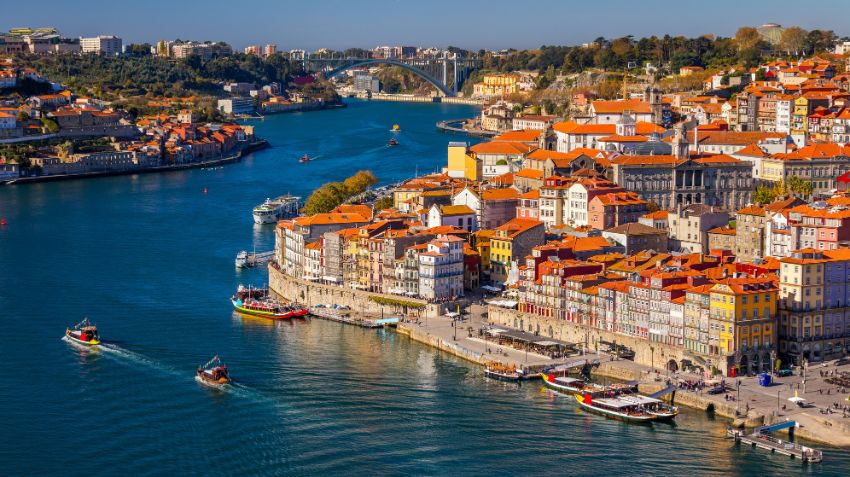
Guimaraes and Porto reveal two different sides of northern Portugal. Porto brings river views, layered neighborhoods and evenings that stretch late, while Guimaraes draws you into medieval streets that grow beautifully quiet after the day-trippers leave.
Close enough to combine, yet distinct enough to shape completely different trips, the real choice is whether you want Porto’s energy, Guimaraes’s intimacy or both in the right sequence.
What Guimaraes and Porto actually feel like for visitors
Porto is a working city with a tourist layer on top, and that combination gives it a texture that many places in Portugal lack. The Ribeira waterfront is loud and photogenic in a way locals accept rather than celebrate; two streets back from the river the city gets more residential, quieter, and considerably more interesting.
The hills slow everything down. Walking between neighborhoods takes longer than the map suggests, partly because the gradient shifts and the stone underfoot demands a different pace.
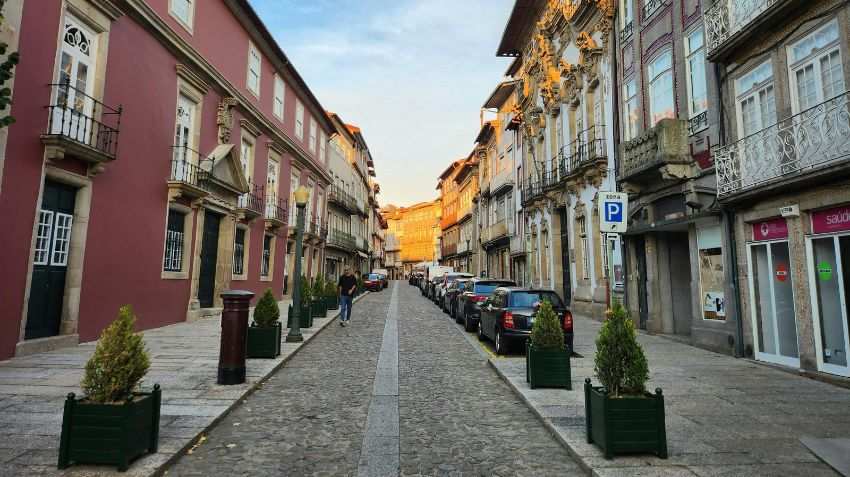
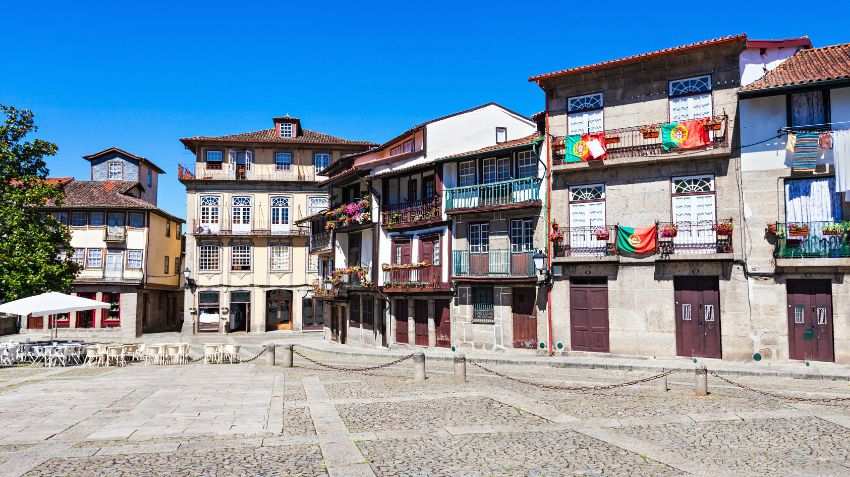
Guimaraes is a smaller proposition. Its historic centre – designated a UNESCO World Heritage site – is concentrated enough to cross in twenty minutes at a relaxed walk. The castle sits above the town, the Largo da Oliveira is the main square where people gather, and the surrounding streets have a preserved quality that makes the city feel almost theatrical in the best possible way.
By 17:00 in summer, when groups begin their return to Porto, the atmosphere shifts and the locals reclaim the streets. That hour before dinner is often when the town feels most like itself.
The temperature difference is small but worth noting: Porto sits closer to the Atlantic coast and catches a sea breeze in the late afternoon, which makes summer evenings genuinely comfortable on the riverfront terraces. Guimaraes sits further inland, and the afternoon heat in the enclosed squares lingers longer. Mornings there – cool stone underfoot, coffee on a nearly empty terrace – are the best hours to be in the old town.
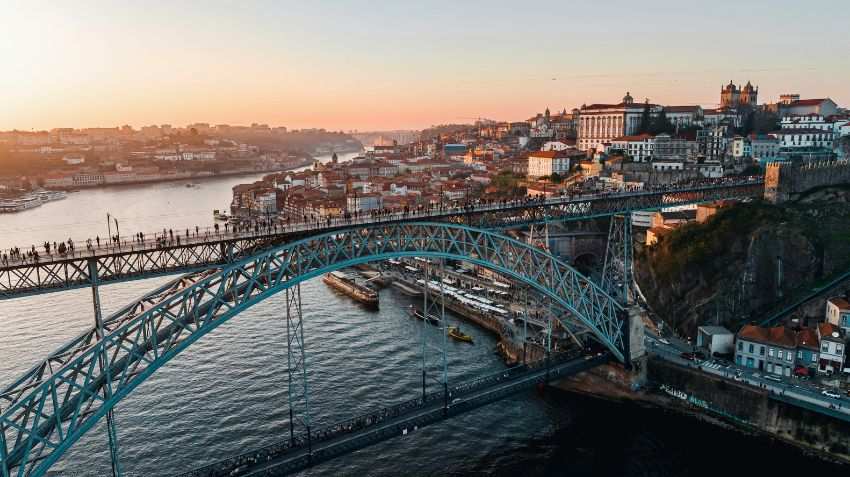
Guimaraes and Porto in photos

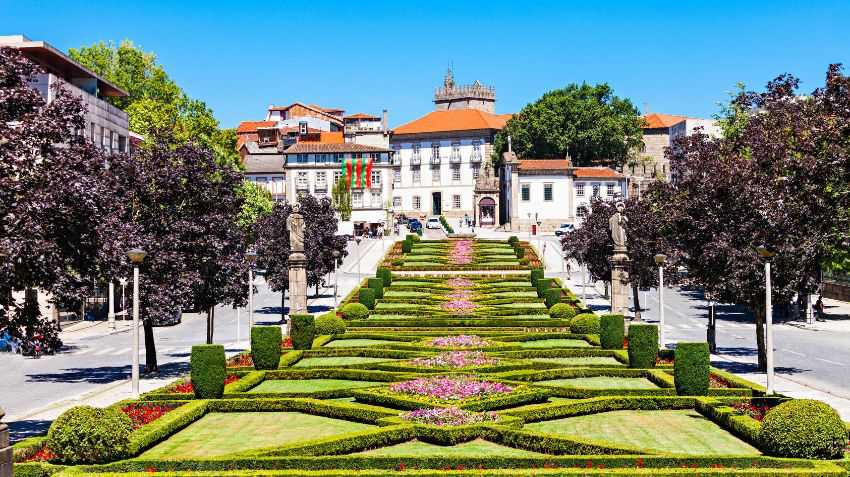
Guimaraes or Porto: which city suits your travel style?
Porto suits a wider range of travelers by design. It has enough variety to absorb three or four days without repetition: the Ribeira riverfront, the quieter Bonfim neighborhood, the Foz area where the river meets the Atlantic, wine cellars in Vila Nova de Gaia across the bridge. There is a working metro that covers the airport and the main visitor zones. The evening rhythm is genuine and late, which suits travelers who like a city that does not shut down at 21:00.
Guimaraes suits travelers who want one clean, low-tempo medieval experience without the social density of a bigger city. It works well for people who find Porto stimulating but occasionally loud, and who want a single day or night in a place that moves at a different speed. Solo travelers, couples on a slower trip, and anyone interested in Portuguese medieval history tend to find it more than worthwhile.
It suits less well as a standalone destination for travelers who need range, nightlife options, or easy connections to the rest of the country – from Guimaraes, logistics are simpler once you are back in Porto.
How to visit Guimaraes and Porto on the same trip
The simplest structure is to use Porto as your base and treat Guimaraes as a day trip. The direct commuter train from Porto Campanha or Porto São Bento takes just over an hour and runs regularly through the day. You leave Porto in the morning before the heat builds, arrive in Guimaraes with the town still relatively quiet, cover the castle and the old centre at your own pace, eat lunch in the Largo da Oliveira, and return to Porto in the late afternoon in time for the riverfront evening.
If you want to stay overnight in Guimaraes – and there are good reasons to, mostly the early morning atmosphere in the empty historic centre – then one night is enough. Two nights only makes sense if you are deliberately slowing down and treating it as a decompression point rather than a sightseeing stop. After two full days the town has been thoroughly absorbed and the lack of variety starts to show.
Travelers who reverse the sequence, basing themselves in Guimaraes and day-tripping to Porto, find it less satisfying. Porto in a single day feels incomplete; the city opens up gradually and rewards overnight stays precisely because the evening and early morning are when its neighborhoods change character. If you only have one base, Porto is the one that earns the most.
For travelers weighing how the north Portugal sequence fits into a broader trip – where Braga sits between these two cities and adds its own Baroque register to the mix – the Braga vs Porto comparison covers that trade-off at the same northern Portugal scale.
Day trips and nearby stops from Guimaraes and Porto worth considering
From Porto, Braga is an obvious continuation: forty minutes by train, a different tempo, less tourist-oriented, and genuinely beautiful in its cathedral district and garden stairways. The Douro Valley wine region runs east from Porto along the river and rewards a full day; the train to Pinhao is one of the most scenic rail journeys in Portugal and does not require advance planning. Sintra sits south on a different trip axis entirely, but travelers routing through Lisbon sometimes add it as a northern counterpoint on a return journey.
From Guimaraes, Braga is the natural nearby continuation, around forty-five minutes by bus or train. The two towns form a natural northern arc together – medieval Guimaraes, Baroque Braga, and the Atlantic energy of Porto – and travelers who want to understand northern Portugal beyond its most visited faces tend to find that combination more satisfying than Porto alone. The Braga first-time guide covers how that city fits into a northern Portugal sequence if Guimaraes is already on the itinerary.
If the broader question is how Portugal’s cities compare across the whole country rather than just the north, the Braga or Lisbon comparison offers a useful frame for travelers still deciding whether to anchor in the north or split the trip across both ends of the country.
Continue exploring the travel graph: the Porto budget and costs guide covers where spending rises, which neighborhoods offer better value, and how to structure the financial side of a northern Portugal trip. The Porto travel costs read sits alongside this node for travelers doing the practical planning after the destination choice is settled.
Should you choose Guimaraes or Porto for your northern Portugal trip?
Porto is the anchor city for northern Portugal and works as a standalone destination of three to four days without needing Guimaraes at all. Guimaraes is an excellent addition for travelers who have the time – one day or one overnight – and who want a different register: smaller, older, quieter in the evening, with a medieval centre that genuinely rewards unhurried exploration.
The Guimaraes vs Porto decision is rarely an either-or choice once you understand the train connection; it becomes a question of how many days you have and whether you want one base or two. In summer, Porto’s Atlantic evenings and Guimaraes’s cool morning hours are each worth experiencing – the city as a social, layered, riverside place, and the town as a brief, well-preserved step backward in time.
Guimaraes vs Porto FAQ: first visit, day trip, duration, best time and itinerary fit
1. Is Guimaraes or Porto better for a first visit to northern Portugal?
Porto is the stronger base for a first visit – it has more range, a functioning metro, and a riverfront that carries the day naturally into the evening. Guimaraes works best as a day trip or a single overnight from Porto, where its compact medieval centre can be absorbed in a few unhurried hours without the need to stay longer.
2. How long do you need in Guimaraes?
One full day covers Guimaraes comfortably. The historic centre, the castle, and the old palace sit within easy walking distance of each other, and by late afternoon most of the main squares have been seen. A single overnight works well for travelers who want the town to themselves in the early morning, before the day-trip crowds arrive from Porto.
3. Can you visit Guimaraes and Porto on the same trip?
Yes, and it is one of the more natural pairings in northern Portugal. The direct train between the two cities takes roughly an hour, which makes a day trip from Porto straightforward. Travelers who want a slower north Portugal read sometimes base themselves in Guimaraes for a night before moving on to Porto, though Porto is the more useful anchor for the broader region.
4. What is the best time of year to visit Guimaraes and Porto?
Late spring and early autumn offer the best conditions for both cities – the light is good, the heat is manageable, and the visitor activity is lower than in July and August. Porto in particular earns its golden hour most visibly in May and September, when the Douro riverfront glows in the late afternoon and the terraces are full without being crowded to the point of losing their atmosphere.
5. Is Guimaraes worth visiting if you only have a few days in Portugal?
If you have three days or fewer, Porto alone is the more rewarding use of the time. Guimaraes is worth the detour once Porto has been properly absorbed – it offers a completely different register, quieter and more medieval, and the contrast between the two places is part of what makes the northern Portugal experience feel complete rather than repetitive.