
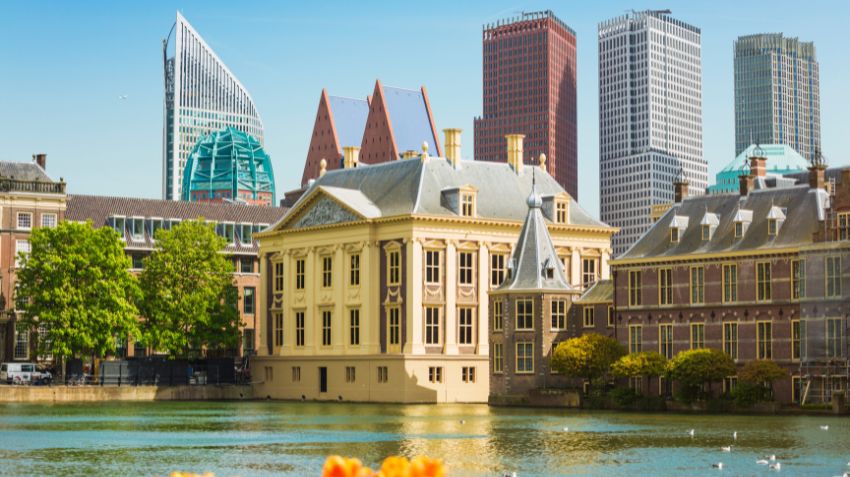
The Hague vs Rotterdam is a common comparison for travelers exploring the Netherlands beyond Amsterdam. Although only about twenty minutes apart by train, the two cities feel completely different. The Hague is low-rise, green, and shaped by politics, while Rotterdam is modern, defined by its port, bold architecture, and post-war skyline.
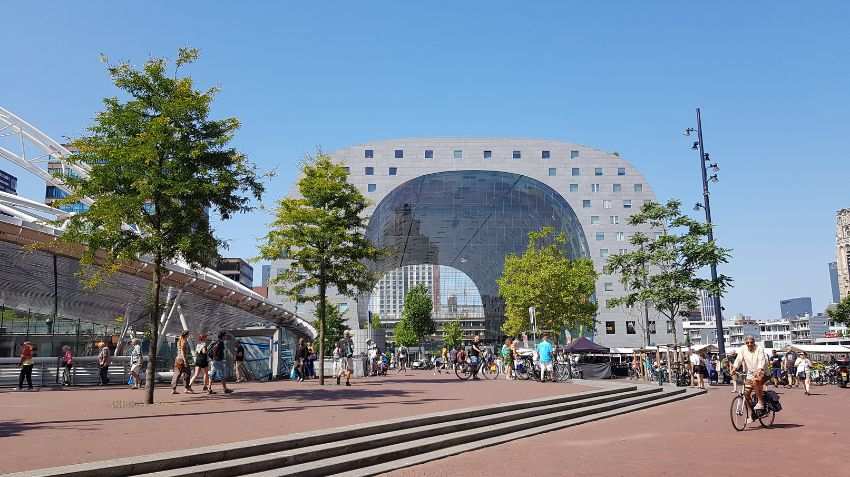
The better choice depends on the experience you want. Rotterdam is ideal for contemporary architecture, the Markthal, and the waterfront, while The Hague is better suited to museums, elegant streets, and a tram ride to Scheveningen’s North Sea beach.
What The Hague and Rotterdam feel like as destinations
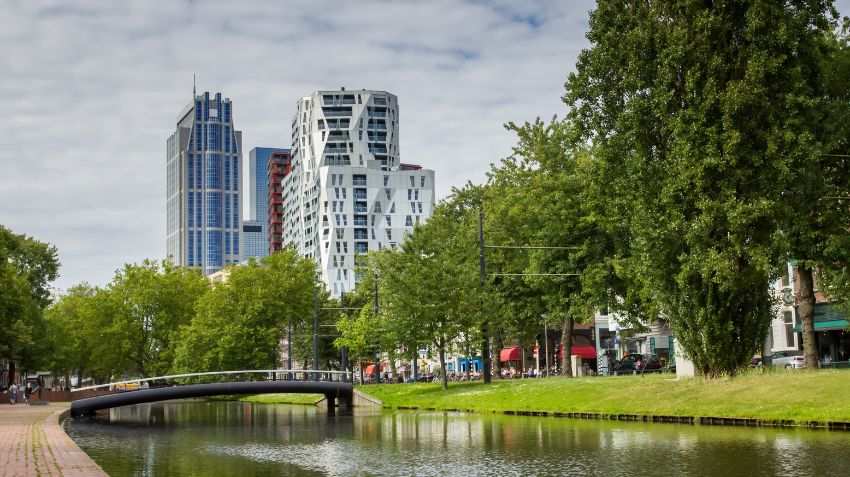
Rotterdam is the more visually arresting of the two. The architecture is the experience – not in a museum sense, but in the sense that the city itself is the exhibit. Post-war rebuilding produced a skyline that has been building on itself ever since, and wandering between the Witte de Withstraat, the Blaak area and the harbour takes you through a city that feels genuinely designed as a 21st-century object. The waterfront along the Maas has a broad, unhurried quality in the morning, especially before the Fenix Food Factory fills with weekend crowds.
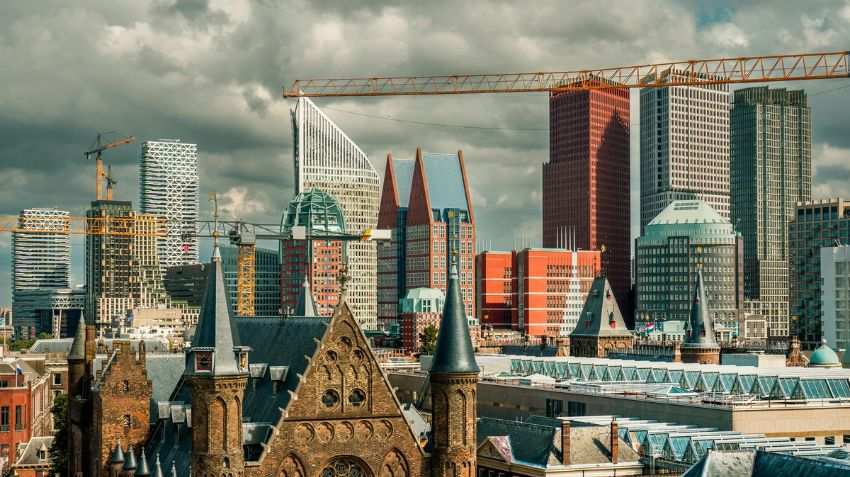
The Hague feels quieter in register – less concentrated on a single visual statement. It’s the seat of the Dutch government and the International Court of Justice, which gives it a low-key seriousness that you notice in the pace of the streets. The diplomatic quarter around Lange Voorhout has wide pavements and old trees and the kind of formal calm that belongs to a city that handles things at a remove from the market.
Two streets from there, the Zeeheldenkwartier neighbourhood runs a completely different rhythm: independent coffee places, small bars, the kind of street where people linger over lunch on a Tuesday without it seeming unusual.
Late afternoon in The Hague often has a softened quality – the light on the sandstone facades along the Binnenhof, the quietness in the residential streets east of the centre. It’s the kind of atmosphere that makes the city feel like it belongs to people who live there, rather than to a tourism circuit.
The Hague and Rotterdam in photos
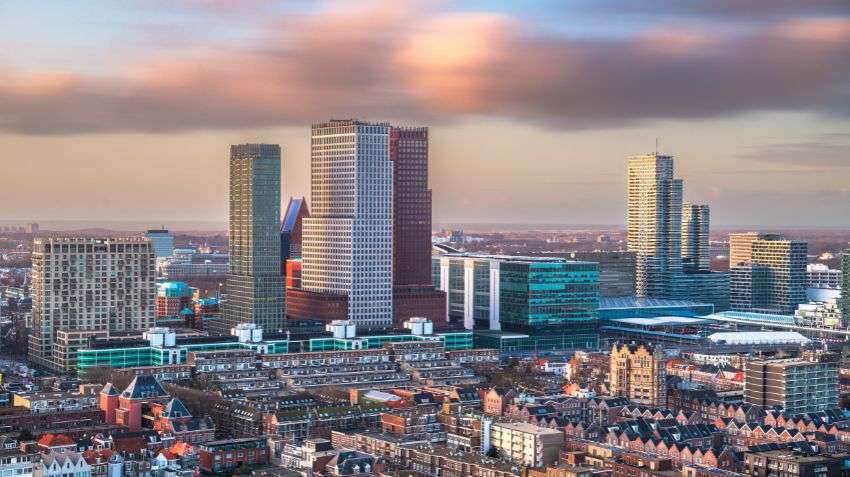
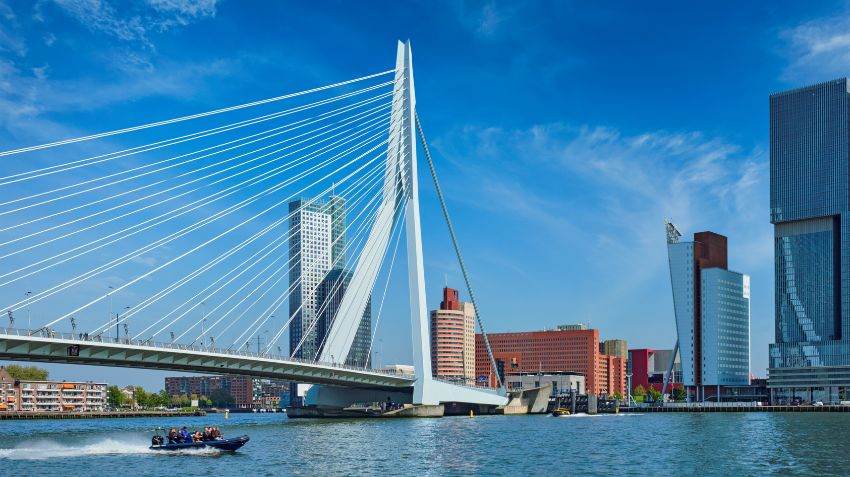
The Hague or Rotterdam: which city suits your travel style?
Rotterdam is the better choice for travelers who want a single high-density day of architecture, food and waterfront movement. It’s compact enough to cover its main territory on foot or by bike, and the concentration of good restaurants along Witte de Withstraat makes dinner easy. The city works well for people who travel by aesthetic – who want to bring back an image of something they hadn’t seen before.
The Hague suits slower travelers, those on longer stays, or anyone interested in moving through a city that feels genuinely inhabited rather than curated for visitors. The Mauritshuis is one of the better small art museums in Europe – Vermeer’s Girl with a Pearl Earring sits there in a room that doesn’t feel dense, and the collection is compact enough to leave without the blankness that larger museums produce.
Scheveningen is within tram range, and the beach there in summer has a broad, unfussy character: long, wind-exposed, good for a walk rather than a swim, with a pier that’s more functional than spectacular.
If Rotterdam feels like the stronger match, the Rotterdam neighborhood guide explains where to stay based on atmosphere, walking access, and traveler type.
If your trip is structured around a single short visit, Rotterdam delivers a clearer payoff per hour. If you have two or three days and want something that opens up gradually, The Hague holds more. For travelers weighing this against a different Dutch city entirely, the Rotterdam or Utrecht comparison covers another version of this same trade-off with a different city character on the other side.
How to travel between The Hague and Rotterdam, and how to get around each city
The intercity train between Rotterdam Centraal and Den Haag Centraal runs several times an hour and takes around twenty minutes. The connection is direct, cheap, and runs late enough that combining both cities in one day is genuinely practical rather than high-tempo. Most travelers do Rotterdam in the morning – the Markthal opens early, the waterfront is at its best before midday – and The Hague in the afternoon, finishing with a tram ride out toward Scheveningen before the evening comes in off the sea.
Within Rotterdam, the metro and tram network is reliable and covers the main visitor areas, though the city is walkable enough that most people end up covering more ground on foot than they planned. The south bank of the Maas – the Katendrecht and Fenix areas – is an easy walk across the Erasmusbrug from the centre, and the bridge itself is worth the crossing for the view of the port skyline behind you.
The Hague’s tram network is the more useful of the two for visitors, particularly for reaching Scheveningen. Tram 1 runs from the centre out to the coast and takes around fifteen minutes. The city’s historic core is compact and flat, which makes walking the default movement for most of the day.
Travelers planning to continue north can also use the Netherlands itinerary guide to connect Rotterdam, The Hague, Amsterdam, and Utrecht into one logical route.
For travelers coming from Amsterdam, both cities are natural additions to a Netherlands trip – Rotterdam at around forty minutes by intercity train, The Hague slightly closer. The Rotterdam budget guide covers what to expect on costs, including where the day-trip economics make most sense.
Best areas and continuations near The Hague and Rotterdam
Delft sits between the two cities and is served by direct trains from both. It runs at a considerably slower pace – the old centre, the canals, the Nieuwe Kerk – and works well as a half-day addition to either Rotterdam or The Hague without requiring a base change. In summer, Delft in the early morning before the tour groups arrive has a calm that neither of its larger neighbours quite matches.
If Amsterdam is your next stop, the Amsterdam travel guide explains how the capital differs in pace, neighborhoods, and overall visitor experience.
Scheveningen, as The Hague’s coastal extension, is worth naming separately: it’s not a resort town in any conventional sense, but the beach is long and the North Sea light in late afternoon has a particular quality – pale, flat, and wide – that makes the walk along the waterfront feel different from a Mediterranean coast in a way that’s worth experiencing rather than just noting. Families and solo travelers both use it well.
For travelers who want to continue into Amsterdam after spending time in this corridor, the Amsterdam canal ring timing and route read handles the logic of fitting that into the same trip without the city feeling rushed.
Explore long-stay friendly destinations in the Netherlands and nearby – Rotterdam, The Hague, and Utrecht each offer a different rhythm for travelers who want to stay beyond the first impression.
Is The Hague or Rotterdam worth visiting for your Netherlands trip?
The Hague vs Rotterdam question doesn’t have a single answer, which is part of what makes the choice worth thinking through. Rotterdam is the right call for travelers who want something architecturally distinct, a city that looks unlike anywhere else in the Netherlands and rewards a concentrated day with strong visual returns. The Hague is the right call for anyone who wants a city that feels liveable – slower, more residential, with a beach within tram range and a museum collection that doesn’t require a full day to absorb.
Travelers looking for a quieter Dutch city after Rotterdam or The Hague may also enjoy the Utrecht travel guide, which offers a slower canal-city experience with fewer crowds.
Both cities work well in summer precisely because they don’t carry Amsterdam’s visitor intensity. The pacing is lighter, the streets have more room, and the experience of moving through either city on a July morning feels like a version of the Netherlands that rewards attention rather than requiring it. For many travelers, the most honest answer is both – the train journey between them is short enough that the choice between them is less a trade-off and more a question of which one to start with.
The Hague vs Rotterdam Netherlands FAQ: first visit, day trip, summer pacing, longer stays and coastal access
1. Is The Hague or Rotterdam better for a first visit to the Netherlands?
Rotterdam suits travelers who want a strong architectural statement and a port-city energy that feels different from the canal-house Netherlands. The Hague works better for those who want a quieter, more residential pace alongside easy access to Scheveningen beach and the Mauritshuis museum. If you only have one day in the region, Rotterdam is the more concentrated experience.
2. Can you visit both The Hague and Rotterdam in one day?
Yes – the train between Rotterdam Centraal and Den Haag Centraal runs frequently and takes around twenty minutes, making a split day straightforward. Most travelers find Rotterdam better in the morning when the market and waterfront are at their best, and The Hague in the afternoon when the residential streets and Mauritshuis are calmer.
3. Which city is better for a longer stay?
The Hague holds up better over several days, particularly for slow travelers. Its neighbourhood rhythm – Zeeheldenkwartier for coffee and independent shops, Scheveningen for an afternoon walk toward the sea – gives the city a liveable texture that Rotterdam, with its more event-driven energy, doesn’t quite replicate at the same pace.
4. Is Rotterdam worth visiting in summer?
Rotterdam in summer is one of the Netherlands’ more rewarding city experiences. The Markthal, the Fenix Food Factory on the south bank, and the rooftop terrace at Boijmans van Beuningen’s depot are all in good form, and the Maas waterfront picks up a relaxed outdoor rhythm in the evenings that the city doesn’t have in the colder months.
5. Which city is closer to Amsterdam for a day trip?
Both are practical from Amsterdam – Rotterdam is around forty minutes by intercity train, The Hague slightly less. Rotterdam tends to work better as a day trip because its main sights are concentrated enough to cover in a focused afternoon, and the train back runs late enough that there’s no pressure to leave early.