
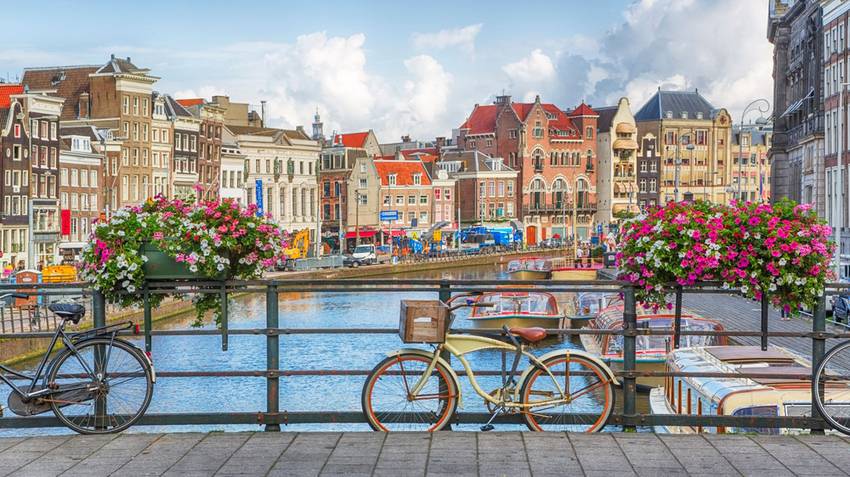
The question of Rotterdam vs Utrecht comes up more often than the standard Netherlands itinerary admits. Amsterdam gets the first look, Bruges sometimes pulls people sideways, and somewhere in between these two cities sit quietly, each making a fairly strong case for itself. They are 40 minutes apart by train and feel, on arrival, like they belong to different categories of Dutch city altogether.
Rotterdam is wide, post-war, architecturally confident. The skyline is a working argument for what happens when a city gets rebuilt from almost nothing after 1940 and decides to stop apologising for it. Utrecht is older, tighter, canalled at street level in a way that feels genuinely unusual – the wharves and cellars that line the lower canal banks were built for unloading goods, and the cafes that occupy them now keep that slightly subterranean, sheltered character.
The choice between them is not really about which is better. It is about which version of a Dutch city suits the trip you are actually taking, in the rhythm you are actually in.
Travelers still deciding where Utrecht fits into a Netherlands trip can continue with the Utrecht first-time guide before narrowing the comparison.
Rotterdam and Utrecht: two distinct Dutch city experiences
Rotterdam reads as a port city that has moved decisively into the twenty-first century while keeping enough industrial texture to feel real. The streets around Witte de Withstraat stay animated into the evening – restaurants opening fully around 18:30, the bar and music scene running comfortably past 23:00 on weekends. The Markthal draws a steady afternoon crowd, and the waterfront at Kop van Zuid has a quieter, more architectural quality, especially on a weekday when the tourist concentration thins and the water reflects the cable-stayed bridge without much interference.
Travelers interested in Rotterdam beyond this comparison may find the Rotterdam neighborhood guide useful for understanding how Katendrecht, Delfshaven, and the waterfront districts differ.
Utrecht operates at a noticeably different frequency. The old town is compact enough to feel like a continuous environment rather than a series of districts. Walking from the Dom Tower to the canal belt to the Oudegracht takes less than fifteen minutes at a slow pace, and by the second morning most people have mapped the city in their heads without trying. Evenings settle earlier than in Rotterdam – kitchens close on some streets by 21:30, and the canal terraces thin out by 22:00 rather than filling further.
Late afternoon light on the Oudegracht, around 19:00 in early summer, falls at an angle that makes the lower canal level glow in a way that is specific to this city’s geometry. It is not something Utrecht advertises; it is just a feature of the stone and the water and the hour.
Which type of traveler each city fits best
Rotterdam fits travelers who want a city that asks something of them visually. The architecture requires attention. The scale means you will cover more ground on foot or by tram, and the city rewards curiosity about contemporary design, food culture, and the kind of urban energy that comes from a port that still functions.
It suits first-time visitors to the Netherlands who want something different from Amsterdam, couples who want good restaurants and late evenings, and anyone with an interest in modernist or brutalist architecture who finds most European city centres too well-preserved to be surprising.
For travelers comparing Dutch city styles more broadly, the Amsterdam first-time guide adds useful context around pace, density, and visitor experience.
Utrecht is a better fit for slow travelers, remote workers who need a week somewhere that does not require constant navigation decisions, and anyone who has already done the larger Dutch cities and wants something more interior. It suits introverts well – the city is social without being dense, and it is easy to spend a full day inside a radius of 800 metres without feeling like you have missed anything essential. Travelers who find Amsterdam’s visitor activity high-tempo in July will almost always prefer Utrecht, where the crowds concentrate in narrower windows and thinner corridors, and where two streets off the main drag the pace drops considerably.
Rotterdam and Utrecht in photos
How Rotterdam and Utrecht fit into the same trip
The train link is frequent enough that the Rotterdam-Utrecht question does not have to be either/or for itineraries with three or more nights in the region. Some travelers base in Utrecht for its easier daily rhythm and take an afternoon in Rotterdam specifically for the Markthal, the Cube Houses, and the Euromast area, returning on the early evening train. Others use Rotterdam as the base – particularly if arriving via Rotterdam The Hague Airport or if the accommodation budget goes further there – and treat Utrecht as a half-day excursion.
Neither city genuinely functions as a day trip from Amsterdam, though many people attempt it. Amsterdam to Utrecht by train takes around 25 minutes; Amsterdam to Rotterdam around 40. Both connections are direct and frequent. The problem is not the travel time, it is that both cities benefit from an overnight stay to catch their evening character – and day-trippers from Amsterdam arrive during the busiest mid-afternoon window and leave before either city settles into its more relaxed after-dinner rhythm.
Within Utrecht, the walking radius is small enough that trams and buses are rarely necessary for the old town. The canal belt, the university quarter, and the main museum cluster sit within comfortable walking distance of each other, and the flat terrain means the walking profile stays easy across a full day. Rotterdam’s distances are larger – the Boijmans Van Beuningen depot, the harbour area, and the Delfshaven district each require tram or metro movement to reach comfortably – but the public transport network is legible and reliable, with trams running regularly until past midnight.
For travelers building a broader Netherlands loop, the Netherlands city loop itinerary covers how Rotterdam and Utrecht sit alongside Amsterdam and The Hague with specific sequencing logic for different trip lengths.
Summer in Rotterdam vs Utrecht
Both cities shift noticeably in June and July. Utrecht’s canal terraces fill quickly on warm evenings, and the lower Oudegracht level – where the old storage cellars open directly onto the water – becomes the natural gathering point for a city that does not have a beach and makes its waterways do that work instead. The atmosphere there on a Thursday evening in late June is unhurried, genuinely local in texture, and easy to settle into.
Rotterdam’s summer energy is wider and more varied. The rooftop bars around the Binnenrotte and Wilhelminapier open their full capacity, the Maas riverfront promenade draws a mixed crowd of cyclists, runners, and people sitting with food from the market stalls, and the harbour area at Kop van Zuid takes on an entirely different character after 20:00 when the day-visit crowds have thinned and the waterfront belongs mainly to people who live nearby.
Utrecht draws more day-trip traffic from Amsterdam in summer than Rotterdam does – it is shorter by train and carries a reputation as a compact, photogenic stop. This means the old town between the Dom and the Oudegracht can feel noticeably active between 13:00 and 17:00 on a summer Saturday. The visitor activity eases by early evening, and the city’s residential character reasserts itself by dinner time. It is worth noting for anyone who prefers the quieter register: the morning window before 11:00 in Utrecht is genuinely calm, and the canal light at that hour is worth building a first morning around.
Travelers weighing this kind of comparison against similar decisions elsewhere in northern Europe – smaller, walkable city versus larger port city – often find the Seville or Valencia read useful as a structural parallel, even if the climates are entirely different.
Accommodation, costs, and city structure
Rotterdam has more accommodation variety and a wider range of price points, particularly in the areas south of the centre where newer hotel stock sits close to the metro. Utrecht’s options concentrate in and around the old town, where location comes at a premium and the supply is tighter. For budget-conscious travelers, Rotterdam tends to offer more flexibility – the Rotterdam budget and travel value read covers how costs actually distribute across accommodation, food, and transport in a typical stay.
Utrecht’s compactness is both its strongest quality and its main boundary. There is not much variation in terrain or atmosphere within the old town itself – the experience is consistent and coherent, which suits certain travelers well, but those who want to move between very different urban registers within the same city will find Rotterdam’s range of districts more satisfying. Rotterdam has areas that feel industrial and raw (Katendrecht, parts of Delfshaven), areas that feel architecturally spectacular (Wilhelminapier), and areas that feel quietly residential and removed from the visitor activity. Utrecht’s variation is subtler.
Neither city has much in the way of elevated terrain. The Dom Tower is the vertical reference point in Utrecht, and the view from the top is worth the climb on a clear day – the flat Dutch landscape extends in a way that is genuinely dense for travelers arriving from hillier parts of Europe. Rotterdam’s flat profile is more expected given its port geography, and the Euromast observation tower covers the elevated perspective for those who want it.
Rotterdam or Utrecht: which city should you choose?
The Rotterdam vs Utrecht decision usually resolves fairly quickly once the traveler is honest about what they actually want from a Dutch city. Rotterdam suits people who want architectural energy, evening life, a city that does not slow down until late, and a waterfront that functions as more than scenery. Utrecht suits people who want a European old town that still feels like a real city rather than a museum district, evenings that end at a reasonable hour, and a pace that allows genuine settling rather than constant navigation.
Travelers building a wider route through the country often use the Netherlands itinerary guide to understand how Rotterdam, Utrecht, Amsterdam, and The Hague work together in one trip.
For a first trip to the Netherlands with, Rotterdam offers more visual distinctiveness – it looks like nowhere else in the country. For a return trip, or for anyone who has already seen Amsterdam and wants something that operates at a different tempo entirely, Utrecht’s canal character and quieter register tend to be the more lasting impression.
The two cities also work well in sequence. Three nights split between them – two in Rotterdam, one in Utrecht, or the reverse – covers both registers without either feeling rushed. The train between them runs often enough that the transition is frictionless in the logistical sense, and the contrast between arriving in Rotterdam’s wide post-war geometry and arriving in Utrecht’s compact medieval centre makes the difference between the two immediately legible.
Travelers building a longer Netherlands loop who want to understand how these cities connect to Amsterdam and The Hague will find the Amsterdam vs Rotterdam comparison useful for sequencing the larger decision first.
The decision between Rotterdam and Utrecht tends to be one of the cleaner ones in this part of Europe. Both cities are well-connected, genuinely liveable for short stays, and distinct enough from each other that choosing wrong is unlikely – the more common outcome is choosing one and immediately understanding why someone else would have chosen the other.
Common questions about Rotterdam and Utrecht
1. Is Rotterdam or Utrecht better for a short trip?
Rotterdam works well for a two or three night stay if you want architecture, waterfront energy, and a city that moves at a confident pace. Utrecht suits travelers who want something more contained – a walkable old town, canal-side cafes, and evenings that feel more residential than urban. Both work independently; the choice depends on the tempo you want rather than the length of the stay.
2. How far apart are Rotterdam and Utrecht?
Direct trains run the route in around 40 minutes, with departures every 15 minutes during the day. The connection is close enough that some travelers base in one city and take a half-day in the other, though both cities reward at least a full overnight stay to catch their evening character rather than just their afternoon visitor activity.
3. Which city is better for slow travel or remote work?
Utrecht tends to suit slow travelers and remote workers more naturally. Its smaller scale means you settle into a daily rhythm faster – a regular canal-side cafe, an afternoon walk along the Oudegracht, dinner before 20:00. Rotterdam has more range, which works well if you want variety but can work against you if what you actually need is a quieter base with a consistent pace.
4. Is Rotterdam or Utrecht more expensive?
Rotterdam generally offers slightly more range at the lower end, particularly for accommodation, since its larger market means more options at different price points. Utrecht’s compact centre concentrates most stays in the same zone, where location tends to be reflected in the rate. Day-to-day food and transit costs run broadly similar between the two cities.
5. Which city has a better atmosphere in summer?
Both cities lean into their canal and waterfront character in June and July. Utrecht’s lower canal terraces – the old wharves built into the stone at water level – fill with people on warm evenings in a way that feels specific to this city and quietly hard to leave. Rotterdam’s harbour and rooftop scene is more expansive and stays active later, which suits travelers who want scale alongside the warmth.