
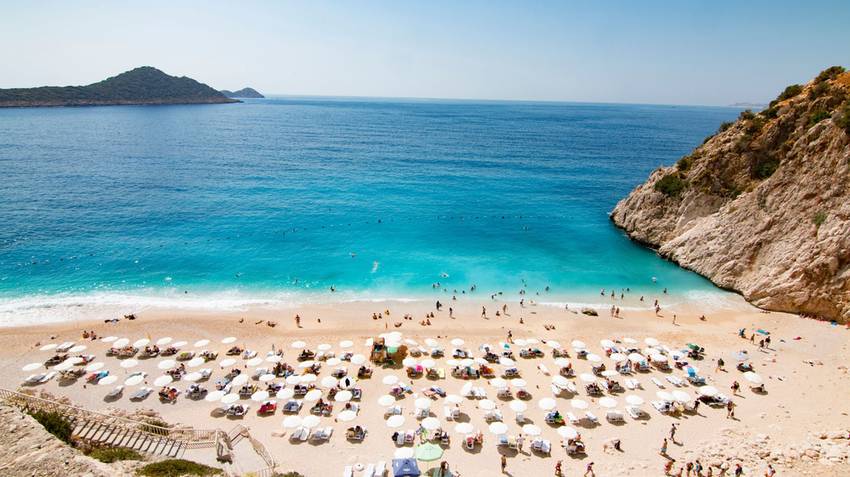
Antalya arrives differently than most Turkish cities. The sea is already visible from the approach road, and Kaleiçi – the walled old town on the cliffs – sits above the harbour in a way that takes a few hours to fully make sense of spatially. This is a good first-time traveler guide to Antalya in the sense that it won’t tell you what to photograph. It will tell you what the place actually feels like to move through.
The city runs on two distinct registers. One is the sprawling resort corridor east of the centre – wide avenues, large hotels, beach clubs with their own internal logic. The other is the older, more compressed city around Kaleiçi, where the streets are narrow, the walls are Roman, and the harbour below holds a handful of fishing boats alongside the tourist boats heading out for day trips. Most first-time visitors don’t fully separate these two things until the second day.
June puts Antalya in an early peak state – the water is warm, the days are long, and the evenings stay light past 20:30. The heat builds through the afternoon but breaks noticeably after sunset, and the city’s rhythm adjusts around that shift in a way that feels natural rather than inconvenient.
What Antalya actually feels like on the ground
The old town is small enough to walk entirely in a couple of hours, but dense enough that most people take longer than they plan. Stone lanes slope toward the harbour, the facades are a layered mix of Ottoman-era houses, Roman gates, and Seljuk minarets, and the light in the early morning – before the tour groups arrive around 10:00 – is genuinely worth setting an early alarm for. By mid-morning the main lanes fill; by early afternoon the heat settles into the stone and the pace slows accordingly.
The harbour is the natural gathering point in the evenings. Restaurants line the quayside, boats leave on sunset cruises, and the crowd composition shifts from mostly tour-group visitors during the day to a more mixed, locally-present atmosphere after 19:00. Two streets back from the waterfront, the residential parts of Kaleiçi are noticeably quieter – laundry hanging between the walls, cats on every ledge, the sound of a television from somewhere above.
The coastal promenade running west from the old town is flat, wide, and useful in a different way – a long walking corridor above the cliff face with the sea below and the city’s café culture spread along the edge. It works best in the hour before sunset, when the light comes in from the west and the sea takes on a colour that you won’t find described in official tourism materials because it genuinely resists description.
Who Antalya suits – and who might want something different
Antalya fits travelers who want the ease of a coastal base with enough historical depth to feel like they’ve been somewhere specific rather than just somewhere warm. The combination of old town walkability, reliable beach access, and decent flight connections makes it a reasonable first Turkish stop for people who want to test the rhythm of the country without the full scale of Istanbul. Couples who alternate between beach days and slow morning walks through the old town tend to get the most out of it.
It suits solo travelers less well as a pure social destination – the nightlife in the old town is relaxed rather than energetic, and the resort strip operates in a self-contained bubble that can feel disconnected from anything specifically Turkish. Travelers whose main interest is urban culture or food beyond the tourist corridor may find the city’s depth runs out faster than expected. If the draw is beaches combined with Ottoman and Roman history, the fit is cleaner; if it’s purely a city experience, the Istanbul first-timer read addresses a different kind of scale and density altogether.
How days unfold – pacing and movement logic
Most first-time visitors underestimate how early the old town is worth visiting. The morning, between 08:00 and 10:00, runs at a completely different tempo – local cafés open, the light is soft and directional across the Roman gate, and the stone is still cool underfoot. The same streets two hours later are navigating a different kind of activity entirely.
Afternoons in June are best spent at the beach or in shade. The Konyaaltı beach, west of the centre, is pebble rather than sand and stays busy through the afternoon but has a more local character than the resort beaches further east. The water is clear enough and the depth drops quickly from the shore. It’s the kind of beach where you swim, dry off on the pebbles, and eventually realise an hour has passed without much happening – which is exactly the point.
Evenings pull naturally back toward the harbour. Dinner starts late by Northern European standards – locals eat closer to 21:00 than the earlier-sitting tourists, and the tables that fill last are usually the ones worth waiting for. The walk back up through Kaleiçi after dinner, when the stones have started to cool and the minarets are lit from below, is the part of the trip that tends to consolidate into a clear memory.
For anyone thinking about day trips, Aspendos – the Roman amphitheatre about 47 km east – runs most efficiently as a morning excursion and back by early afternoon, avoiding the midday heat inside the exposed site. Some travelers who want to understand Turkish bazaar culture in a more compressed setting find the Turkey market districts timing read useful before planning those kinds of stops.
The seasonal shape of a first visit
June is early enough in the peak window that the city hasn’t yet reached its maximum visitor activity. July and August bring higher temperatures and a significantly denser crowd in Kaleiçi – still manageable but a different experience, with queues at the harbour restaurants and the main gate becoming a genuine bottleneck between 11:00 and 14:00.
May and October are the most comfortable months for anyone prioritising the old town over pure beach time – the sea is still swimmable, the afternoon heat doesn’t close things down in the same way, and the general rhythm of the city feels more accessible. That said, June has its own logic: long evenings, warm water, a city that knows exactly what it is doing and does it with a reasonable amount of conviction.
Winter is a different proposition. Antalya has a mild Mediterranean winter, and the old town is genuinely pleasant in December and January – almost empty, the light low and clear, the café culture more local and less performative. The beach is out of the equation, but the city’s architecture and the surrounding landscape take on a different quality when they’re not competing with sunbathers for attention.
What to use as a base and what sits nearby
Staying inside or immediately adjacent to Kaleiçi makes the morning and evening rhythms work naturally – the walk to the harbour takes five minutes, and the promenade is accessible without a transit decision. The boutique hotels within the old town walls vary significantly in quality but the location logic is consistent: early mornings and late evenings belong to whoever is already there on foot.
Where you stay affects the experience more than many first-time visitors expect. The Antalya neighborhood guide breaks down how Kaleiçi, Konyaaltı, Lara, and the surrounding districts differ in atmosphere, access, and daily rhythm.
For travelers building a longer Turkish itinerary, Antalya sits usefully between the coast and the interior. Cappadocia is a natural extension for anyone drawn to a completely different physical landscape – the Cappadocia balloon flight read covers what that specific experience actually delivers, which is useful context before deciding whether it belongs in the itinerary or not. The Antalya local life after beach node goes further into where the city’s less visitor-facing rhythm actually lives, for anyone planning a stay beyond three or four days.
The version of Antalya that works
Antalya works best when you let it organise around the sea and the old town rather than trying to treat it as a city with a full urban agenda. First-time visitors who arrive expecting Istanbul-level cultural density tend to find less than they wanted; those who arrive expecting a well-structured coastal base with a genuinely interesting historical centre tend to find more. The fit is clearest for travelers who want to swim, walk through something old, eat well in the evening, and repeat that shape for three or four days without needing constant novelty.
The city doesn’t ask much of you in terms of planning logic. It has a clear centre, a legible pacing structure, and an evening atmosphere that rewards the people who slow down enough to be part of it rather than moving through it. For a first time in Turkey, it’s a reasonable entry point – less demanding than Istanbul, more specific than a resort that could be anywhere.
Frequently asked questions about Antalya for first-time visitors
1. When is the best time to visit Antalya for the first time?
May and October sit in a comfortable middle ground – warm enough for swimming, cooler than the July-August peak, and noticeably less crowded in the old town. June works well if you arrive with the expectation of long hot afternoons and a city that comes alive again after sunset.
2. Is Antalya worth visiting beyond its beach resorts?
The old town, Kaleiçi, holds a genuinely different rhythm from the resort strip – Roman walls, a small harbour, and a neighbourhood where people actually live. Spending even half a day there shifts the trip from a standard beach destination into something with more texture and a clearer sense of place.
3. How many days do first-time visitors need in Antalya?
Three to four days lets you absorb both the coastal pace and the old town without rushing. Two days is workable if the trip is mainly beach-focused, but it leaves little room for the slower mornings and evening walks that give the city its actual character.
4. Is Antalya easy to navigate for first-time visitors?
The city centre and Kaleiçi are compact enough to walk once you orient yourself to the cliffside layout. The tram line connects the main zones without much complexity, and ride apps like BiTaksi handle everything else reliably.
5. What is the atmosphere like in Antalya compared to Istanbul?
Antalya runs at a noticeably slower tempo – the streets are quieter, the scale is more manageable, and the day organises itself around the sea rather than around the city’s own momentum. Travelers who find Istanbul’s density absorbing often use Antalya as the natural coastal counterpoint on the same trip, and the contrast between the two tends to clarify both places.