
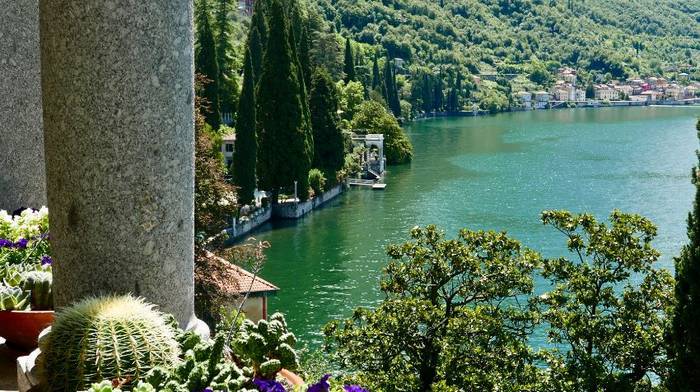
Lake Como arrives as a specific kind of calm. The water is still early in the morning, the ferry horns carry across to the opposite shore, and the villas on the hillsides sit quietly above the tree line as the light comes up over the eastern mountains.
This first-time traveler guide to Como is written for people who have heard the name and want to understand what the place actually feels like to spend time in – not just what to photograph, but how a day here unfolds and whether it suits the way they travel.
Como is not a city that asks much of you. The historic centre is compact, the lake is immediately present from nearly every street, and the rhythm of the place is built around mornings on the water, slow lunches, and late afternoon arrivals by ferry into small stone landings. It is a destination that rewards stillness more than it rewards ambition.
In summer the lake runs warm and full. Bellagio fills with visitors by mid-morning, the ferries queue at the central triangle, and the narrow alleys near the landing stages get genuinely busy between noon and four. None of that changes the quality of an early walk along the promenade, or a table at 20:30 when most of the day’s arrivals have already left for Milan.
What Lake Como actually feels like for first-time visitors
The geography does most of the work. Como sits at the southern tip of the lake’s western arm, a small city with a cathedral, a covered market street, and a lakefront that faces directly across the water. From here, the lake branches into two long arms that reach north toward the Alps, and the towns in between – Bellagio at the central fork, Varenna on the eastern shore, Menaggio on the west – each have their own character and their own pace.
Bellagio is the one most travelers have seen in photographs: steep lanes, bougainvillea on old walls, a promenade above the water. It earns that reputation. It also fills up completely by late morning in July and stays that way until the afternoon boats leave. The village itself is small enough to walk in twenty minutes, and a lot of what makes it work is the light on the water from the upper terraces around 18:00, when the crowds have thinned and the lake takes on a particular amber tone.
Varenna, across the water and slightly north, runs quieter. The ferry from Bellagio takes about fifteen minutes. The main promenade, the Passeggiata degli Innamorati, sits just above the lake surface and stays in shade through the morning. The village has fewer restaurants and a smaller landing, which means it absorbs visitors more slowly and empties more completely by evening. For travelers who want the lake atmosphere without the Bellagio volume, it is usually the right answer.
Como city itself is often treated as a transit point, which undersells it slightly. The Duomo is worth an hour. The covered silk market street has good food shops. The lakefront promenade runs for about two kilometres and faces west, which means late afternoon light falls directly across the water and the hills on the opposite shore turn a particular shade of grey-green around 19:30 in summer.
Is Lake Como right for your travel style as a first-time visitor?
Como suits travelers who are comfortable structuring their own time. There is no single worth a stop attraction pulling the day into shape – the experience is built from a ferry crossing, a walk, a long lunch, a swim somewhere quieter, and a return trip at golden hour. That rhythm is genuinely pleasurable for slow travelers, couples, and anyone coming from a dense city who wants to decompress without giving up aesthetic pleasure.
It fits less naturally for travelers who want continuous activity, a strong nightlife scene, or a wide range of evening options. The lake towns are small. Restaurants fill early in peak season. After 21:00, most village promenades are quiet. Como city has more options than the villages, but it is still a small city by Italian standards.
Budget-conscious travelers should know the lake runs toward the premium end of northern Italy. Villa hotels and lakeside restaurants reflect the clientele the area has always attracted. There are reasonable options, particularly in Como city and in villages slightly off the main tourist circuit, but this is not the destination for stretching a tight budget across a long stay.
Travelers deciding between a lakeside escape and a classic Italian city break may also find the Milan travel guide useful for comparing two very different northern Italy experiences.
Travelers coming from Florence or considering where to sequence their northern Italy leg will sometimes find the Bologna first visit read useful for comparison, since Bologna anchors a different kind of urban-Italy trip that sits naturally before or after a lake stay.
Como in photos
How to get around Lake Como as a first-time visitor
The public ferry system, operated by Navigazione Laghi, is the practical backbone of the lake. There are two main services: the slower passenger ferries that stop at every landing, and the faster hydrofoil service that connects the major towns.
A single crossing from Como to Bellagio on the slower boat takes around an hour and ten minutes. The traghetto car ferries cross the central lake between Bellagio, Varenna and Menaggio in about fifteen to twenty minutes and run frequently enough through the day that you can use them flexibly without planning too tightly.
The regional train follows the western shore and is genuinely useful. From Como San Giovanni station, trains reach Varenna-Esino (served by a shuttle down to the village) in about forty minutes. This route is worth knowing for the day Como city is your base and you want to reach the eastern shore without waiting for a slow boat.
Arriving from Milan is straightforward. Trains from Milano Centrale reach Como San Giovanni in around thirty minutes on the fast service. Malpensa airport requires more planning, either a direct shuttle bus to Como or a train change through Milan, with journey times typically between sixty and ninety minutes depending on connection timing. Most travelers using Malpensa allow two hours between landing and arrival at their hotel.
Driving gives flexibility for reaching some of the less-served villages on the upper lake, but the road along the western shore narrows significantly between Como and Menaggio, and parking in Bellagio in July is limited enough to make ferry access genuinely easier. If the plan is to spend most of the time between the main lake towns, a car adds complication rather than convenience.
If Lake Como is part of a broader northern Italy journey, the Italy itinerary guide explains how Milan, Venice, Florence, and Rome connect into a practical route.
Best Como lake towns and day trips worth considering
Beyond the central triangle, a few places reward the extra ferry stop. Lenno, on the western shore south of Menaggio, sits close to Villa del Balbianello – a formal garden villa on a wooded promontory that appears on the lake from the water as something between a folly and an architectural dream. The gardens are open on most days in summer, accessible by boat from Lenno or by a path from the village.
Gravedona, further north where the lake narrows toward the Alpine approach, has almost none of the visitor concentration of Bellagio and a long waterfront piazza that stays genuinely quiet even in peak summer. It takes about an hour and a half by slow ferry from Como, which means most day-trippers skip it. The light at that end of the lake has a different quality in the afternoon – cooler, more northern, less Mediterranean.
For travelers combining Como with a wider Italy itinerary, the city pairs naturally with Milan as a two or three day extension, and the rail connection makes it an easy day trip in either direction.
Some travelers who find themselves wanting more city texture after a few days of lake pace find that the Florence first-time visitor read helps clarify what a different kind of Italian urban rhythm actually looks like, and whether it belongs before or after a lake stop in the sequence.
Travelers choosing between Italy’s best-known lakeside and canal destinations may also enjoy the Florence or Venice comparison, which explores a completely different travel rhythm.
Is Lake Como worth visiting for first-time travelers to Italy?
For the right kind of traveler, yes, clearly. Como delivers something Italian cities do not: a slower register, a specific relationship between landscape and human scale, and days that feel genuinely unhurried without feeling empty. It works best when approached without too much ambition – one ferry crossing per day, one village properly explored, one long lunch somewhere with a water view.
Where the fit shifts is for travelers expecting intensity or variety. The lake is beautiful in a quiet way, but it is not endlessly eventful. A week here without building in a Milan day or an upper-lake excursion can start to feel circular by day four. Three to five days is the range most first-time visitors find right.
This first-time traveler guide to Como points toward a particular kind of Italian experience – composed, scenic, and structured around the pleasure of moving slowly between small places. If that is the rhythm you are looking for, the lake tends to deliver it with reliable consistency, which is a rarer thing than it sounds.
Travelers planning a longer northern Italy loop sometimes find it useful to understand how Rome’s costs and rhythms sit against the north before committing to the full itinerary. The Rome budget planning read covers the daily cost structure and pacing differences in a way that helps sequence a trip more honestly.
Lake Como first-time visitor FAQ: days needed, best base, summer crowds, getting around and lake atmosphere
1. How many days do you need at Lake Como for a first visit?
Three to four days gives a comfortable first read of the lake. One day in Como city, a day exploring Bellagio and the central lake by ferry, and a slower day in a quieter village covers the main registers without feeling rushed. Some travelers extend to five or six days if they want to settle into one base town properly.
2. What is the best base town at Lake Como for first-time visitors?
Como city works well as a practical base: good rail connections to Milan, a walkable historic centre, and easy ferry access to the rest of the lake. Bellagio has more of the classic lake atmosphere but books out quickly in summer and suits travelers who are happy to plan further ahead. Varenna on the eastern shore is quieter, smaller, and appealing if you want slower mornings and fewer crowds.
3. Is Lake Como worth visiting in summer despite the crowds?
July and August bring the densest visitor activity to Bellagio and the main ferry routes, but the lake itself does not lose its character. Early mornings on the water are genuinely calm, the villages away from the central triangle stay at a slower tempo, and evenings on the lakefront in Como city have their own unhurried rhythm once the day-trippers clear.
4. How do you get around Lake Como as a first-time visitor?
The public ferry network is the natural way to move between towns, with traghetto car ferries crossing the central lake and slower passenger boats serving most landings. The regional train follows the western shore and is useful for moving between Como and villages like Varenna quickly. Driving is possible but parking around Bellagio is tight in peak summer.
5. What does Lake Como feel like compared to other Italian lake destinations?
Como has a more formal, composed atmosphere than Maggiore or Garda – less family-resort energy, more villas and gardens and a particular quality of afternoon light on the water that feels unhurried even in high season. The towns are small, the ferry crossings take minutes rather than hours, and the pace between arrivals and dinners is easy to structure around however slowly you want to move.