
Milan has a specific quality that takes a day or two to register: it does not feel like it is waiting for you to arrive.
What makes Milan distinct is the gap between its reputation and its actual texture. From the outside it reads as a fashion capital, a financial centre, a place where style is serious. On the ground it is also a city of covered arcades, canal neighbourhoods, Renaissance paintings in quiet churches, and food culture that is genuinely northern in character, heavy on risotto and cotoletta rather than pasta and tomato. The design industry is present but mostly invisible unless you are looking for it during trade fair weeks.
Late spring is a good moment to think about coming. The days are long, terraces are open, and the city has not yet reached the compressed energy of July when heat settles between the buildings and does not leave until well past midnight.
This first-time traveler guide to Milan exists partly because the city rewards travelers who understand this rhythm before they land, and partly because a surprising number of people arrive expecting Rome or Florence and find something considerably different.
What Milan actually feels like on the ground
The Duomo square is where most first-time visitors begin, and it sets up a useful contrast. The cathedral itself is enormous and detailed in a way that takes time to read properly, but the square in front of it is loud and dense at almost any hour between 10:00 and 18:00. Pigeons and street vendors and tour groups and commuters all move through the same space. It is not an intimate introduction to the city.
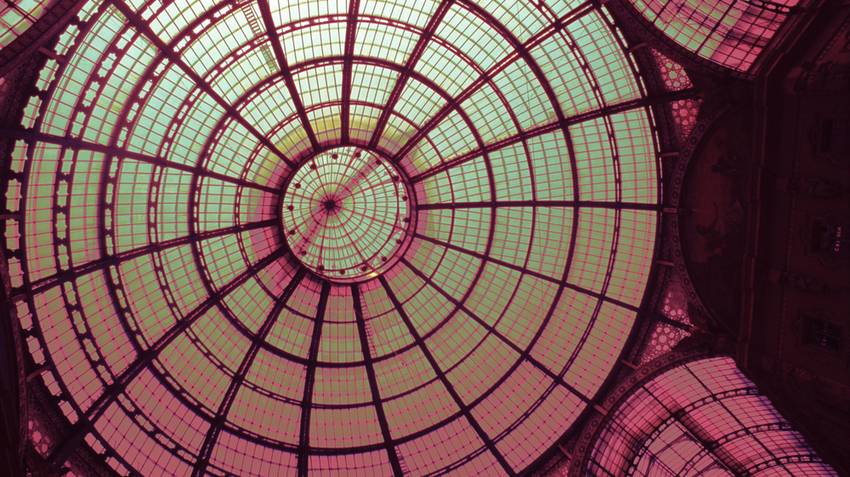
Two streets away, though, the scale drops. Milan’s centre is built on a grid that opens into smaller piazzas, shaded arcades, and streets where the main sound is a tram passing. The Galleria Vittorio Emanuele II connects the Duomo to La Scala through a vaulted iron-and-glass gallery that has functioned as a covered public space since 1877. It is busy, but the architecture absorbs the movement in a way the open square does not.
The canal district, Navigli, sits about 20 minutes southwest of the Duomo on foot or two stops by metro. In the evening, particularly from May onward, this is where the city shows a different face: aperitivo bars along the water, outdoor seating filling from 19:00, a more local crowd than the historic centre. It is noisy in the way that Italian public life tends to be noisy, which is to say animated rather than aggressive.
Who Milan fits, and who it does not
Milan works well for travelers who are comfortable in a city that does not pause for tourism. There is no historic centre that exists primarily as a pedestrian experience. Trams and scooters and delivery vehicles move through streets that also carry foot traffic, and the rhythm of the city is shaped by working life, not by visitor itineraries. For travelers who find that kind of urban density energising, Milan is genuinely absorbing. For travelers who were hoping for a slower, more curated introduction to Italy, it may feel like the wrong starting point.
It suits people who are interested in food culture beyond the obvious, in design, in Renaissance art that is not on every postcard (Leonardo’s Last Supper requires advance booking but is genuinely worth the planning effort), and in neighbourhoods that feel like they belong to their residents.
Many travelers arrive in Italy deciding between Florence’s concentrated historical core and Milan’s broader urban character. The Rome versus Florence comparison helps frame why some visitors end up preferring a city built around atmosphere and art while others look for a more varied urban experience.
It is less suited to travelers whose primary Italy mental image involves coastal light, slower afternoons, and the sensation of a city built entirely for pleasure. Those travelers often find their footing better in Florence, where the historic concentration is tighter and the pace softer, or in a coastal city entirely. The Florence first-visit read is useful for anyone weighing those two cities at the same stage of planning.
How the days unfold: pacing and movement logic
Milan rewards a pace of roughly two neighbourhoods per day, not six attractions in a single circuit. The flat terrain makes walking feel easy on the map, but the distances are real. The walk from the Duomo to Brera takes about 15 minutes; from Brera to Porta Venezia takes another 15. From the Duomo to Navigli on foot is closer to 25 minutes. By the third or fourth movement of the day, that adds up.
The metro is the sensible alternative and it is not complicated. Four lines, clear signage, logical interchanges. Line 1 (red) and Line 3 (yellow) cover most of what a first-time visitor needs. The Cadorna station connects to the Malpensa Express for airport arrivals, which matters if you land at Malpensa rather than Linate. Linate is closer to the city but the transit connection is less direct, involving either a bus or a short metro journey from a bus terminus.
Mornings before 10:00 are the best time for the Duomo interior, the Galleria, and the streets around La Scala. The cruise groups arrive around 10:30 and the square changes character quickly. Late afternoons from 16:30 onward, after the midday heat disperses and before the aperitivo hour fills the terraces, are a good window for Brera or the streets around Porta Ticinese.
Dinner timing is worth knowing in advance: kitchens in Milan open around 19:30 and most Milanese eat between 20:00 and 21:30. Arriving at a restaurant at 18:30 will result in an empty room and occasionally a slightly strained welcome. Arriving at 20:00 is fine. Arriving at 21:30 on a weeknight is also fine, though the kitchen may close at 22:30.
The neighbourhoods that shape the experience
The areas around the Duomo and within walking distance of the Galleria cover the primary historic layer. Brera, immediately north, is a gallery district with narrow streets and a calmer social energy than the centre. It has the Pinacoteca di Brera (a serious collection, not a tourist attraction with a gift shop at the front), small bars, and a Saturday market on the square that draws a local crowd.
A common mistake is assuming Milan’s accommodation decision matters less than it does. The Milan neighborhood guide explores how Brera, Navigli, Porta Venezia, and the central districts create very different versions of the same city.
Porta Venezia and Corso Buenos Aires serve the eastern side of the centre. This is where the city becomes less curated and more residential, with a more diverse food landscape and a different social texture than the fashion-adjacent streets near Montenapoleone.
For the canal experience, Navigli and Darsena are the two adjacent areas. Darsena has been redeveloped around a large artificial basin and is less frenetic than the canal-side bars of the Navigli proper. On Sunday mornings, the Navigli antiques market runs along the canal, and the streets are walkable in a way they are not on a Saturday night. The full neighbourhood guide for where to stay in Milan, including how these areas feel for different traveler types, sits in the Milan neighborhood stays read.
What first-time visitors tend to underestimate
The Last Supper. It is not an polarising tourist obligation. Leonardo’s mural in the refectory of Santa Maria delle Grazie is one of the most technically and emotionally specific things in Italian art, and the viewing format (timed groups of 30, 15 minutes in the room) is structured enough that you are not fighting crowds to see it. The booking requirement is real and the tickets disappear well in advance, particularly from May through September. Plan this before anything else.
The aperitivo culture is also easy to underestimate if you arrive expecting it to be a light pre-dinner drink. In Milan, the tradition, particularly in the Navigli and Garibaldi areas, involves a drink accompanied by food, sometimes a full small buffet, at a price point that effectively combines happy hour and dinner into one sitting. It is both economical and a genuinely Milanese social format.
The trade fair calendar shapes the city’s energy and its hotel prices in ways that catch first-time visitors by surprise. Salone del Mobile in April, MIPIM weeks, various design and fashion weeks across the year: during these periods the city fills, prices increase significantly, and the restaurant dynamic shifts. Checking whether your travel dates overlap with a major fair is worth doing before booking.
Milan against nearby alternatives
The practical comparison that comes up most often is Milan versus Florence. Florence is historically denser, more immediately legible as a Renaissance city, and considerably less work to absorb in three days. Milan has more city texture, more neighbourhood variety, and a food and nightlife culture that Florence does not match. They are not interchangeable, and many travelers benefit from including both, which works logistically given the 1 hour 45 minute high-speed train between them.
Another question appears once travelers start building a wider northern Italy itinerary. The Venice versus Milan comparison looks at how the two cities differ in pace, atmosphere, and traveler fit.
For travelers who find themselves wanting to understand northern Italy more broadly after a first Milan visit, the Po Valley and Lake Como are both within an hour by train or car. Verona and Bologna are on the high-speed line. The city functions as a reasonable base for a wider regional read, not just a standalone stop.
Visitors planning to continue south often discover that Milan and Rome create a more interesting contrast than Milan and Venice. The Rome first-time guide explains how daily rhythm, scale, and visitor experience change between the two cities.
If the comparison you are actually weighing is another Italian city, the Florence neighbourhood read at Florence neighborhood rhythms is useful for understanding how different the two cities feel from the inside, not just from the outside.
Thinking through your first visit to Milan
Three to four days gives you enough time to stop treating the city as a series of checkboxes and start to feel how it actually runs. The Duomo, the Galleria, the Last Supper, a full aperitivo evening in Navigli, an afternoon in Brera: these are not a complete picture of Milan, but they are a beginning that makes sense.
The city suits travelers who are comfortable navigating on their own, who find urban density interesting rather than exhausting, and who are willing to follow the local schedule rather than impose their own. It does not reward travelers who want everything to be within five minutes of each other, or who are hoping for a slower, more atmospheric introduction to Italy.
For a first-time traveler guide to Milan to be genuinely useful, it has to say this clearly: Milan is worth understanding on its own terms, not as a substitute for something else. It is a serious, functional, design-conscious city that happens to contain some of the most significant art and architecture in Europe, embedded inside a working urban life that has no particular interest in being picturesque. That combination is exactly what makes it worth the trip for the right kind of traveler.
Milan first-time visit: common questions
1. What is Milan actually like for a first-time visitor?
Milan is a working northern Italian city with a distinct rhythm: fast-paced during the day, considerably more relaxed by evening. It is less tourism-dependent than Rome or Florence, which means the city does not perform for visitors in the same way, but it also means the food, neighbourhoods, and daily life feel more authentic to how Italians in the north actually live.
2. How many days do you need in Milan on a first visit?
Three full days covers the main areas comfortably without feeling rushed. Four days allows you to slow down, spend a longer evening in Navigli, and absorb the city at a pace where you start to understand its rhythm rather than just move through its landmarks.
3. Is Milan good for first-time visitors who are not into fashion?
The fashion identity is mostly concentrated in a few streets and the retail district near Via Montenapoleone, which is easy to walk past without engaging. The rest of Milan runs on design, food, aperitivo culture, Renaissance art, and a canal district with its own evening energy that has nothing to do with shopping.
4. When is the best time to visit Milan for the first time?
Late spring and early autumn are the most comfortable windows. April through early June brings mild temperatures, longer evenings, and the outdoor terrace culture that makes the aperitivo hour worth lingering over. July and August work but the heat accumulates by afternoon and some Milanese businesses reduce hours or close entirely.
5. Is Milan easy to get around without a car?
Very easy. The metro covers the central areas clearly, trams fill in the gaps, and most of what a first-time visitor wants to see sits within a walkable radius of the Duomo. The flat terrain helps considerably, though the distances between neighbourhoods are longer than the map suggests when you are on foot for the first time.