
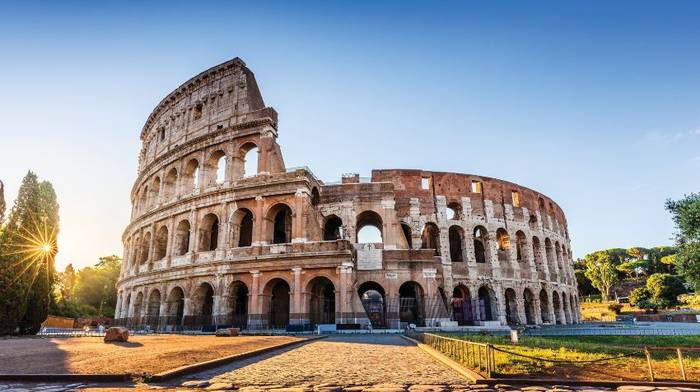
Rome in early summer runs at a particular tempo: long light, packed piazzas, the smell of coffee and warm stone coming off the streets before 9:00. It is not a quiet city at this time of year, and it does not pretend to be. But the budget travel guide to Rome question is simpler than it looks from the outside, because the city’s essential experience does not live behind expensive tickets. Most of it is sitting on steps, walking old streets, and eating well for very little.
The cost ceiling in Rome is real – the Colosseum, the Vatican, the sit-down restaurants near the Pantheon. These are the places where spend accelerates fast. But Rome has a parallel economy that runs alongside the monuments, and most travelers who stay more than two nights end up spending most of their time there without planning to.
Travelers building a broader route through the country may also find the Italy itinerary guide useful for understanding how Rome fits within a longer multi-city trip. This is not a guide to surviving Rome on the cheapest possible number. It is a read on where value sits in the city, which neighborhoods work for budget travelers, and how the rhythm of a day here shapes spending in ways that a price list alone cannot.
Rome travel costs: where your budget goes
The Colosseum entry runs around 16 to 18 euros for the standard ticket, including the Roman Forum and Palatine Hill. The Vatican Museums and Sistine Chapel add another 17 euros minimum. Pre-booking online is close to mandatory in summer – same-day entry is still theoretically available but the queues at the ticket windows by 9:30 are long enough to consume an entire morning. Book both of these in advance, pay the standard price, and treat them as the two fixed costs of being in Rome.
For travelers approaching the city for the first time, the Rome travel guide provides a broader overview of neighborhoods, daily rhythm, and trip structure.
Everything beyond those two sits on a sliding scale that is largely under your control. The Borghese Gallery is worth the 15 euros and the mandatory reservation – it runs ticketed entry at timed intervals, which means the crowds inside are actually manageable, one of the few major sites in Rome where that is true. The Pantheon moved to a paid entry model recently, now at 5 euros, which remains reasonable.
After that, the rest of the historic centre is free. The Campo de’ Fiori, the Piazza Navona, the Trastevere streets, the Jewish Ghetto, the Aventine Hill view over St Peter’s dome through the keyhole in the Knights of Malta garden – none of these cost anything, and they carry as much of what Rome feels like as any museum.
How to eat well in Rome on a budget
The price difference between eating near a monument and eating two streets away from one is not marginal. A coffee at the bar near the Trevi Fountain runs 3 to 4 euros. The same coffee in Prati or at a bar in Testaccio is 1.20. A pasta lunch at a restaurant overlooking the Pantheon can reach 18 to 25 euros for a single plate. In a trattoria in the Nomentano district or along Via Ostiense, a full two-course lunch with house wine and water is still 12 to 16 euros, with bread on the table.
The places where Roman food is affordable are also, largely, the places where Romans actually eat. Testaccio, historically the city’s working-class food neighborhood, still has market stalls, offal bars, and lunch spots that cater to people with limited midday time and no interest in paying tourist prices. The covered market there opens in the morning and closes by early afternoon – a useful rhythm to know.
Pizza al taglio (sold by weight, eaten standing) remains one of the best-value meals in the city. A generous slice costs 2.50 to 4 euros depending on the topping. Supplì – fried rice croquettes – are the other standard: 1.50 to 2.50 euros each. These are not budget compromises; they are how the city eats at lunch.
Dinner in Trastevere used to be straightforward value. It is more complicated now – the neighborhood’s popularity has compressed the price range upward on the main squares. The back streets still have decent trattorias at sensible prices, but they take a few minutes of walking to find and the menus are usually handwritten or spoken, not laminated and illustrated.
Best areas to stay in Rome on a budget
Where you sleep shapes the daily budget more than most individual decisions. A bed in a dorm near Termini starts around 18 to 25 euros in summer; private rooms in budget hotels in the same area run 60 to 90 euros. The Termini zone is functional and well-connected by metro and bus, but it does not have the evening atmosphere of the historic neighborhoods.
Travelers deciding where to stay may also find the Rome neighborhood guide useful for comparing Termini, Prati, Trastevere, and other accommodation bases.
Prati, just across the Tiber from the Vatican, offers a different register: a residential neighborhood with good bakeries, neighborhood coffee bars, and a calmer street rhythm. Accommodation runs slightly higher than Termini but still below Trastevere or the historic centre. The trade-offs is distance – the Colosseum is a 30-minute walk or a bus ride from Prati, which is not far, but it shapes how you sequence days.
Trastevere appeals to travelers who want to be inside the atmospheric core of the city. Prices for accommodation reflect that. It is a reasonable base if the budget has a bit of flex and the priority is the evening rhythm – the neighborhood fills with locals and visitors after 20:00 in a way that is genuinely part of the Rome experience, not a performance of it.
For travelers who have already done Rome’s monuments and want to explore the city’s quieter register, the Florence first-time visitor guide covers how a shorter, denser Italian city reads as a contrast – less dense as a base, more walkable by day two.
Getting around Rome without overspending
Rome has two metro lines (A and B), which intersect once at Termini. They cover the main anchors – Termini, Spagna, Ottaviano near the Vatican, Colosseo – but leave significant parts of the historic centre without direct metro access. The historic triangle between the Pantheon, Campo de’ Fiori, and Piazza del Popolo is not on any metro line; you walk or take a bus.
A 48-hour transit pass costs around 7 euros; a 72-hour pass around 12. For a three-day visit with multiple neighborhood moves per day, the pass makes more financial sense than buying single tickets at 1.50 each. For a visit structured around walking with occasional bus use, single tickets work fine.
The walking profile of central Rome is worth understanding before you plan a day. Distances on the map look modest, but the terrain is uneven – cobblestones through most of the centre, and a surprising amount of up and down around the Aventine, Janiculum, and Palatine areas. A day that includes the Colosseum in the morning, the Vatican in the afternoon, and dinner in Trastevere in the evening is physically more demanding than it looks on paper. Most travelers end up naturally halving their ambitions by day two, which is when Rome starts to feel less like a checklist and more like a city.
Best time of day to explore Rome
By late June, Rome runs at a heat-shaped rhythm that rewards early starts. The Colosseum and the Forum are manageable before 9:00; by 11:30 the stone is fully warm and the queues are long. The same is true of the Vatican – early entry on a weekday morning is a materially different experience from arriving at midday in July.
Travelers comparing Italy’s two most visited cultural cities may also find the Rome versus Florence comparison useful before planning a longer itinerary.
The city’s afternoon, roughly 13:00 to 17:00, is when locals disappear. Kitchens close or reduce, the streets thin, and Rome takes on a slower quality that is actually pleasant if you are not trying to do anything specific. A long lunch, a coffee, a slow walk through a quieter neighborhood – this is the part of Roman summer that does not make it into itineraries but tends to be what people remember.
Evenings come alive from about 19:00. The piazzas fill, the restaurants open properly, and the light on the stone buildings goes amber and then orange in a way that is particular to cities built at this latitude and density. The Piazza Farnese, relatively tourist-light even in summer, tends to hold this evening quality well. Campo de’ Fiori, by contrast, becomes a different kind of scene after 21:00 – loud, young, and lively, which suits some travelers and not others.
Travelers weighing Rome against a city with a different cost and crowd profile at the same season sometimes look toward Iberia instead. The Madrid or Malaga contrast read covers how two different Spanish registers compare – useful if Rome is one of several options being considered for a longer summer trip.
How to make your Rome budget go further
The pattern with budget travel in Rome is predictable once you have seen it a few times. The planned costs – entry tickets, accommodation – stay under control. The unplanned costs – a coffee near a monument instead of two streets away, a lunch chosen by proximity rather than by neighborhood, a taxi after a long evening instead of the night bus – accumulate faster than expected.
The practical adjustments are small. Carry a water bottle and use the city’s free drinking fountains (the nasonismall cast-iron street taps) rather than buying water. Eat the main meal at lunch when set menus are available rather than at dinner when à la carte runs higher. Pre-book paid sites so the morning is not lost to a queue. Walk more than you think necessary – Rome reveals itself at walking pace in a way that buses and metros do not capture, and the distances, while long on tired legs, are rarely as long as a hot afternoon makes them feel.
For travelers who find Rome’s summer density works better as a shorter stop with a longer base elsewhere, the Porto budget costs read gives a useful counterpoint – a city where slower pacing and lower baseline costs make the same travel budget stretch differently.
How much does Rome cost per day?
A realistic budget for Rome in summer, done thoughtfully, lands somewhere between 60 and 90 euros per person per day covering accommodation in a shared or budget private room, food from a mix of markets, lunch trattorias, and one dinner out, public transport, and the two main paid sites spread across the visit. Dropping below 50 euros is possible in a dorm bed with market lunches and free sights. Spending more is also easy – Rome does not resist it.
For travelers considering another Italian city with a different budget profile, the Florence budget travel guide offers a useful comparison point.
The city’s essential quality – the density of history in a small walkable area, the food culture that survives in the neighborhood restaurants, the evening energy that runs late and without much urgency – is not priced at the level of the Colosseum ticket. Most of it is available to anyone willing to walk past the restaurant with the laminated menu and find the one with the handwritten board instead.
Budget travel in Rome: frequently questions
1. How much does a day in Rome cost on a budget?
A realistic budget day runs around 60 to 80 euros per person, covering a bed in a mid-range hostel or budget hotel, meals from local trattorie and markets, public transport, and one paid site. Dropping below 50 euros is possible if you cook, use a dorm bed, and stick to free sights.
2. Is Rome affordable for food?
More than people expect, if you move away from the tourist corridors. A full trattoria lunch with wine runs 12 to 18 euros in Prati or Testaccio; the same plate costs twice that near the Pantheon. Supplì, pizza al taglio, and coffee at the bar are still the cheapest, most satisfying way to eat in the city.
3. What is the cheapest way to get around Rome?
A 48-hour or 72-hour transit pass covers buses and the metro for around 7 to 12 euros, which makes more sense than buying single tickets if you are moving between neighborhoods more than twice a day. The centre is walkable, but the distances between major sites are longer than they appear on a map.
4. Which neighborhoods are best for budget travelers in Rome?
Prati, Testaccio, and Pigneto consistently offer better value on accommodation, food, and coffee than the historic triangle. Trastevere sits in between: atmospheric and walkable, but priced higher than it used to be, especially at restaurants facing the main piazzas.
5. Is Rome worth visiting on a tight budget?
Substantially, yes. Most of what makes Rome feel like Rome is free or nearly free: the piazzas, the early morning light on the Forum, the neighbourhood rhythm of a Sunday morning in Testaccio. The Colosseum and the Vatican are the main paid commitments, and both can be pre-booked online for the standard entry price.